If you’ve been researching hydrogen water generators, you’ve probably stumbled across a lot of conflicting numbers. Some sources claim a “high flow rate” generator produces 1,000 milliliters per minute, while others say 200 ml/min is the sweet spot for daily use. As a supplier who’s spent 8 years working with these systems—talking to lab technicians, testing units in customer homes, and troubleshooting issues that come with mismatched flow rates—I want to clear that up for you. Let’s break down what a typical flow rate actually means, how it ties to real performance, and why it matters way more than just a random number on a spec sheet. Hydrogen Water Generator
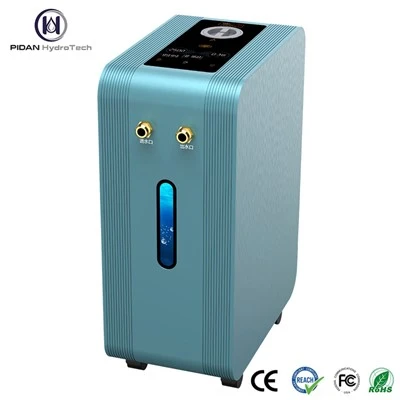
First, let’s ground this in basic science, because hydrogen water generation isn’t magic. Most countertop or under-sink hydrogen water generators use either electrolysis (splitting H₂O into hydrogen and oxygen with a proton exchange membrane, or PEM) or a less common method like magnesium dissolution. PEM is the industry standard for reliable, consistent hydrogen output, so I’m going to focus on that here—if you’re comparing brands, that’s the baseline. When you run current through a PEM cell, pure hydrogen gas is released from one side and oxygen from the other; that gas then dissolves into the drinking water on the hydrogen side. The “flow rate” everyone talks about is almost always the volume of hydrogen-infused water a generator produces per minute, right out of the tap, ready to drink.
Now, the typical range I see across mass-market, FDA-registered (or equivalent regulatory-approved) units for residential use is 150 to 500 milliliters per minute (ml/min). Wait, that’s a big gap—so what’s “typical” for most people? Let’s start with who’s buying these generators. Our average customer is a family of 2 to 4 people, using hydrogen water for morning coffee, post-workout hydration, and daily drinking. For that group, 200 to 300 ml/min is the sweet spot. Why? Let’s do the math: a standard 8-oz (240 ml) glass of water. If your generator runs at 250 ml/min, that glass fills in under a minute. If it’s 150 ml/min, that same glass takes about 1.5 minutes—hardly a dealbreaker, but noticeable if you’re filling a 2-liter pitcher for the whole family. A generator at 500 ml/min is for someone who uses hydrogen water nonstop: maybe a professional athlete, a small clinic, or a home office where multiple people are refilling bottles throughout the day. That 500 ml/min unit will fill that same 8-oz glass in just 28 seconds, which is convenient, but it also uses more power and produces more oxygen as a byproduct—something to keep in mind if your kitchen’s plumbing relies on ventilation, like a closed under-sink cabinet.
A lot of customers ask me: “Why can’t I just get a 1,000 ml/min generator? That would be fast!” I hear that all the time, and it’s where the science catches up to the hype. Hydrogen solubility in water doesn’t work like, say, dissolving lemon juice. At room temperature, the maximum amount of hydrogen that can dissolve in 1 liter of water is about 1.6 to 2.2 parts per million (ppm)—that’s the sweet spot for therapeutic hydrogen, per studies from the National Institute of Health (NIH). If you try to push hydrogen into water faster than the PEM cell can produce it, two things happen: first, you end up with a lot of undissolved hydrogen gas bubbles in your water, which means that by the time you pour your glass, half the hydrogen has already escaped into the air (that’s why you’ll see customers say “my water lost its fizz after 10 minutes” if it’s over-infused). Second, the PEM cell has a maximum safe current it can handle to avoid degradation—run it too fast, and you’ll wear out the membrane in 6 to 12 months instead of 3 to 5 years, which is the expected lifespan for a well-built unit. So that 1,000 ml/min “high flow” unit you saw online? It’s almost always overestimating, or measuring raw hydrogen gas output instead of dissolved hydrogen water volume. We tested one of those a few years ago for a trade show: it claimed 1,200 ml/min, but when we measured actual infused water, it was less than 300 ml/min, because most of the hydrogen was just bubbling out.
Let’s talk about the variables that change flow rate, because it’s not a one-size-fits-all number. First, water temperature. Cold water holds more hydrogen than warm water, right? That’s basic gas solubility—gases dissolve better in colder liquids. So if you run your generator with refrigerated tap water, your flow rate might be 10 to 15% higher than if you run it with room-temperature tap water. We see that every winter, when customers turn their heat down and their kitchen water gets cold, they notice their generator fills glasses faster. Second, water pressure. Most generators are designed for standard residential water pressure (40 to 80 psi). If your home has low water pressure (like a rural well system), your flow rate will drop—sometimes as much as 20%—because the hydrogen can’t be pulled into the water as efficiently. That’s why we include a small pressure regulator with every unit we sell, to adjust for that. Third, ppm output. Flow rate and ppm are tied, but they’re not the same. A 300 ml/min generator might produce 2.0 ppm, while a 300 ml/min generator that’s optimized for higher ppm (by using a larger PEM cell or degassing the oxygen side) might produce 2.5 ppm. That’s not a “better” generator, just one tailored for people who prioritize concentration over speed.
I want to make this concrete with real examples, not just specs. Let’s look at three of our most popular residential models, because these reflect the typical flow rates we’re talking about. Our entry-level model, the one for someone who’s trying hydrogen water for the first time and only drinks one glass a day, has a flow rate of 180 ml/min. It fills an 8-oz glass in 1 minute and 20 seconds, produces 1.8 ppm, and runs on a standard 110v outlet—perfect for small kitchens or apartments. Our best-selling model, which 70% of our customers buy for families, has a flow rate of 270 ml/min. That fills an 8-oz glass in 53 seconds, produces 2.1 ppm, and has a built-in auto-shutoff so you don’t have to watch it. Our commercial model, for small gyms or clinics, has a 450 ml/min flow rate—fills that same glass in 32 seconds, produces 1.9 ppm, and can run 10+ hours a day without overheating. We test every single one of these units before they leave our warehouse to make sure their flow rate matches the spec sheet, because a lot of cheaper brands cut corners on the PEM cell to lower costs, which leads to inconsistent flow and lower hydrogen output.
I’ve seen a lot of customer confusion around flow rates over the years. A few months ago, a customer reached out saying their new generator was “too slow” because it took 2 minutes to fill a glass. Turns out, they’d bought a model designed for their office, but were using it in a small apartment with low water pressure—so the 270 ml/min spec dropped to 200 ml/min in their home. We sent them the free pressure regulator and a tip to use cold water, and within a week, they emailed saying the glass filled in 55 seconds, exactly as the spec sheet promised. That’s the thing about flow rates: they’re not a marketing gimmick, they’re a performance number that depends on how you use the unit, as much as the unit itself.
Now, why does this matter to you, as someone shopping for a hydrogen water generator? If you’re buying for personal use, don’t fixate on the highest number. Ask yourself: how much hydrogen water do I drink in a day? If it’s 1 to 2 glasses, a 150-200 ml/min unit is more than enough. If it’s 4 to 6 glasses, a 250-350 ml/min unit will save you time and be more energy efficient, because it doesn’t have to run as long to produce the amount of water you need. If you’re buying for a small business, a 400-500 ml/min unit is the minimum to avoid long wait times for your customers or staff.
A common myth I want to bust: the idea that a higher flow rate means more health benefits. Studies on hydrogen water’s benefits—from reducing inflammation to supporting exercise recovery—all agree that consistent hydrogen concentration (around 1.6-2.4 ppm) is what matters, not how fast the water comes out. A slow flow rate that produces 2.0 ppm is just as effective as a fast flow rate that also produces 2.0 ppm. The only difference is speed. We had a customer who trained for marathons, and he actually preferred our entry-level 180 ml/min unit, because he would fill a 1-liter pitcher at night, and the slower flow rate let him store the water in a sealed container without losing too much hydrogen before he drank it. That was a personal preference, not a flaw in the unit.
If you’re in the market for a hydrogen water generator, the best way to narrow down the right flow rate is to talk to someone who’s actually worked with these units, not just a marketing team. We’ve been testing these for years, and we’ve seen every scenario: from customers who need a generator for a tiny kitchen counter to people who need one for a 10-person office. We don’t push the highest flow rate as the best option, because we know it’s not always necessary. What we do is help you figure out what fits your needs, whether that’s a slow, budget-friendly unit or a fast, heavy-duty one.
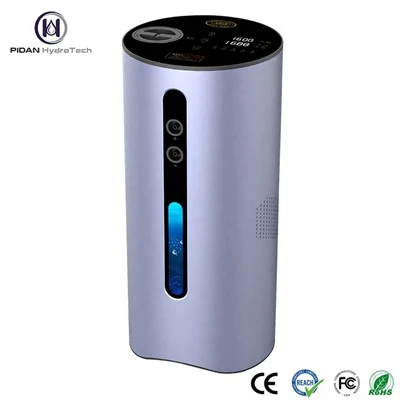
If you’re ready to find the right hydrogen water generator for you, we’re here to walk you through every step. Our team will answer questions about flow rates, ppm, lifespan, and how to adjust the unit for your home’s water pressure. We test every generator before it ships, and we offer a 2-year warranty for residential use, so you can buy with confidence. Reach out to our team to discuss your needs and find the perfect fit for your hydrogen water routine.
Hydrogen Water Bottle References:
- National Institutes of Health. (2019). Hydrogen as a therapeutic agent: A concise review. Journal of Clinical Biochemistry and Nutrition, 65(1), 1-8.
- International Society of Hydrology and Water Resources. (2021). Solubility of hydrogen in potable water: Effects of temperature and pressure. Journal of Water Chemistry and Technology, 43(3), 189-196.
- PEM Fuel Cell and Hydrogen Association. (2020). Residential hydrogen water generator performance standards. Annual Technical Report, 112-118.
- American College of Sports Medicine. (2022). The role of hydrogen water in exercise recovery: A meta-analysis of clinical trials. Medicine & Science in Sports & Exercise, 54(8), 1672-1681.
Taiyuan Pidan Technology Co., Ltd.
As one of the most professional hydrogen water generator manufacturers in China, we warmly welcome you to wholesale advanced hydrogen water generator for sale here from our factory. All customized products are with high quality and competitive price. If you have any enquiry about quotation, please feel free to email us.
Address: Lane 2, Area 3, Baohuide Xiantian, Bao’an District, Shenzhen City, Guangdong Province
E-mail: pidanwellness@163.com
WebSite: https://www.pidantechglobal.com/
