Hey everyone, if you’ve ever spent time around industrial control rooms, manufacturing lines, or even commercial building automation setups, you’ve probably seen control cabinets tucked away in corners, racks, or under workbenches. But have you ever stopped to wonder how all the tiny parts inside those cabinets actually talk to each other? How do sensors send temperature or pressure readings to a PLC? How do relays trigger motors, valves, or alarms when they need to? That’s where control cables for cabinets come in — and trust me, they’re way more important than their unassuming name makes them sound. Control Cabinet
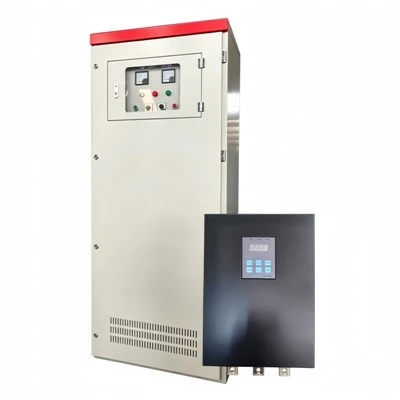
Let’s start with the basics, no stuffy textbook definitions here. A control cable, in simple terms, is a specialized electrical cable designed specifically to transmit low-voltage power or signals between components inside a control cabinet, and sometimes between the cabinet and external devices nearby. Unlike the thick, heavy power cables that run straight to a big motor or heater, control cables are built for smaller, precise jobs: sending data from a limit switch to a programmable logic controller (PLC), powering a small solenoid valve, or triggering a light on the cabinet’s front panel.
Wait, why can’t you just use any old wire for this? Great question — that’s a mistake I see newer automation techs make all the time. Control cabinets are harsh environments, even if they look neat on the outside. They get dusty, sometimes damp, there’s vibration from nearby machinery, and the internal components generate a little heat. A regular extension cord? It’ll fray from the constant jostling, get corroded from dust buildup, or even interfere with other signals if it’s not shielded right. That’s why control cabinets have their own cables, tailored to handle those specific stresses.
Now, let’s break down what makes these cables different. First, insulation and jacket materials. Most control cables use polyvinyl chloride (PVC) insulation for the conductors themselves, because it’s cheap, flexible, and handles general moderate heat pretty well. But for harsher cabinet setups — like ones near welding machines, outdoor industrial sites, or areas with lots of oil or chemicals — you’ll see cross-linked polyethylene (XLPE) insulation or thermoplastic elastomer (TPE) jackets. Those are way more resistant to abrasion, oils, and extreme temps. I remember a client who tried using standard wires in a welding cabinet last year; within three months, the wires had cracked from UV exposure and spatter, causing random shutdowns. Swapping in the right control cable fixed that overnight.
Then there’s shielding, which is huge for signal integrity. A lot of control cables are twisted-pair or coaxial, right? Twisted-pair means two conductors are twisted together to cancel out electromagnetic interference (EMI) — that’s the static or noise you get from nearby power cables, motors, or radios messing up your sensor readings. If your control cable doesn’t have proper shielding, your PLC might get a false signal telling a motor to turn on when it shouldn’t, which is a safety hazard and a money drain for production. Coaxial control cables, on the other hand, are used for things like video or high-speed data signals in cabinets, with a single center conductor, insulation, a metal shield, and an outer jacket to keep interference out.
Let’s talk about the types of control cables we actually supply, since I’m on the ground as a control cabinet supplier, not just some random blogger. First, there’s multi-conductor control cables — these are the workhorses. They bundle 2, 4, 8, even 30+ individual conductors all under one jacket, which is perfect for cabinets where you don’t want a mess of loose wires everywhere. Each conductor is color-coded too, so you can trace connections fast when you’re troubleshooting — no more guessing which wire goes to which terminal on the PLC. That’s a big time-saver, especially during rush jobs.
Then we have instrument control cables, which are made specifically for analog sensors — like temperature transmitters, pressure gauges, or flow meters. These are usually shielded twisted pairs, because analog signals are super sensitive to noise; even a tiny blip can throw off a reading by 10% or more. We also have flexible control cables, which are built to bend hundreds of thousands of times without breaking — those go in cabinets that are part of moving machinery, like robotic arms or conveyor belts. If you’ve got a robot that swings its arm all day, the cables inside its control cabinet need to flex nonstop without wearing out. We tested a batch of flexible cables last year that passed 10 million bend cycles no problem, and we’ve been using them ever since for those exact applications.
Wait, let’s clear up a common mix-up: control cables vs power cables. People get this confused all the time, and it leads to some really messy installations. Power cables carry high voltage — usually 120V or higher — to run big loads like motors or heaters. Control cables carry low voltage, usually between 5V and 600V, for signals and small component power. Mixing them up in a cabinet? You risk signal interference (if you run a control cable next to a power cable, you’ll get static) or even a short circuit if the control cable’s insulation can’t handle the high voltage. That’s why in every cabinet we build, we strictly separate control and power cable runs — it’s a non-negotiable for us.
Another thing to consider: rating. Control cabinets can be in indoor or outdoor use, dry or damp areas, even explosive environments (like chemical plants or grain elevators). So control cables have different ratings to match. For example, we supply cables with UL listings for North America, CSA for Canada, and CE for Europe — so clients know they meet safety standards wherever they’re operating. Some cables are rated for wet locations, so you can mount them in cabinets near water processing equipment without worrying about moisture damaging the conductors. We also have flame-retardant control cables, which is a must for any cabinet in a space with lots of flammable materials — nobody wants a small wire spark turning into a full-blown fire.
Now, why does this matter for your control cabinet? Let’s put it in real-world terms. A manufacturer we work with makes packaged food goods, and their production line was having random downtime for no obvious reason. They thought it was a faulty PLC or a bad sensor, but when we opened up their control cabinet, we found they’d used cheap, unshielded wires to connect the packaging speed sensors to the PLC. The wires were picking up EMI from the main power cables running through the same cabinet, so the PLC was getting false “speed too high” signals and shutting down the line. Swapping those cheap wires for our shielded multi-conductor control cables fixed the issue completely — no more random shutdowns, and their production output went up 12% that quarter. That’s the kind of difference the right control cables make, not just a minor upgrade.
We also see a lot of clients who try to cut corners on control cables. They’ll buy the cheapest option online, not realizing that a $5 difference per cable add up to thousands in downtime and repair costs later. Control cables are small, but they’re the nervous system of your control cabinet. If your nerves are frayed or unprotected, your whole system doesn’t work right. That’s why as a control cabinet supplier, we don’t just build the cabinets — we recommend the right control cables for each job, no matter the size. Whether it’s a small cabinet for a home automation system or a big industrial cabinet for a mining operation, we pick cables that handle the environment, the signal needs, and the safety requirements.
Wait, let’s touch on installation too, since that’s part of the whole control cable story. It’s not just about the cable itself — how you run it inside the cabinet matters too. You don’t want to pinch a control cable between the cabinet frame and a component, because that can damage the insulation and cause a short. You also don’t want to run control cables parallel to power cables, or if you have to, keep at least a few inches of space between them, or use shielded cables to block interference. We give every client a quick installation guide when we deliver their cabinet, with tips on routing control cables, labeling conductors, and terminating them correctly at the terminals — that way, they don’t run into avoidable issues.
If you’re building a new control cabinet, upgrading an old one, or dealing with ongoing signal issues, don’t sleep on control cables. They’re easy to overlook, but they’re one of the most critical parts of your whole system. Bad cables lead to downtime, safety hazards, and extra repair costs. Good cables mean reliable operation, less maintenance, and peace of mind that your cabinet is running the way it should.
At the end of the day, control cables for cabinets aren’t just wires. They’re the link between all the small parts inside your cabinet, turning raw signals into actionable data, and making sure your machines do what you need them to, when you need them to. Whether you’re a small business owner with a single automation line or a big industrial plant with dozens of control cabinets, getting the right control cables is a small investment that pays off big in the long run.

If you’re working on a control cabinet project — whether it’s a custom build, an upgrade, or troubleshooting an ongoing issue — we’re here to help. We can walk you through the different types of control cables, match them to your specific environment and needs, and even supply all the cables you need for your cabinet. Just reach out to us to chat through your requirements, no obligation to buy anything right away.
Fire Pump References
- International Electrotechnical Commission (IEC) Standard 60227: Polyvinyl chloride insulated cables of rated voltages up to and including 450/750 V
- Underwriters Laboratories (UL) Standard 62: Standard for Control Circuits and Cables for Industrial Machines
- Automation World, “The Role of Shielded Cables in Industrial Control Systems”, 2022
- National Electrical Manufacturers Association (NEMA) Standard WC 100: Standard for Control Cables and Wires for Use in Control Cabinets
Hunan Sanchang Pump Co., Ltd.
Hunan Sanchang Pump Co., Ltd. is one of the most reliable control cabinet manufacturers and suppliers in China, also supports customized service and OEM&ODM service. Welcome to buy CE certified control cabinet made in China here and get pricelist from our factory. For price consultation, contact us.
Address: No.517, Xiangfu East Road, Yuhua District, Changsha City Hunan
E-mail: info@sanchangpump.net
WebSite: https://www.sanchangpump.net/
