Hey there, let’s cut to the chase—if you’ve ever glanced at your phone, a coffee machine, a car dashboard, or even a warehouse machine and thought “what that little glow mean?” you’ve run into a signal light indicator. As someone who’s been supplying these tiny, game-changing parts for over 8 years now, I’ve lost count of how many customers come to me thinking these are just “pretty little bulbs.” Nah—they’re the unsung heroes of every tech, machine, and gadget that keeps our lives running. Let’s break this down like I chat with my team at the shop, no stuffy jargon, promise. Indicator Light
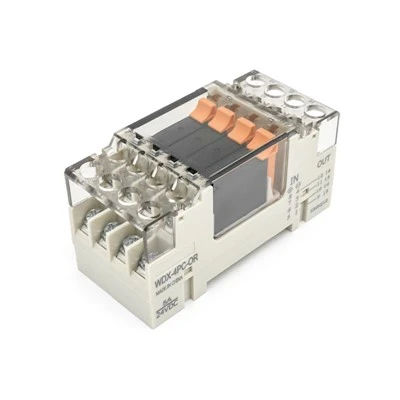
First off, what even is a signal light indicator, at its most basic? It’s a small, usually light-up (or sometimes sound-making) device that sends a clear, instant message about a system’s status. Think of it like a traffic light for anything digital or mechanical, but way smaller. Unlike big alarms that blare and give you a migraine, these are targeted, quick, and designed for one job: tell you exactly what’s up without overcomplicating it. They run on low power (most use 12V, 24V, or 120V—nothing fancy) and come in all the shapes and sizes you could imagine: tiny 5mm ones for your laptop’s charging port, bigger 22mm ones for heavy industrial machines, even flat ones for kitchen appliances.
Wait, let’s clear up the mix-up people sometimes have with other terms—people call them “indicator lights,” “signal lights,” “pilot lights,” even “status LEDs” (that’s the modern, LED version, obvi). Yeah, they’re basically all the same thing, with tiny differences depending on where they go. For example, a pilot light used to be that old incandescent bulb on your furnace that glowed red to say it was on—those are the OG signal indicators. Now 99% of what we supply are LED-based because they last way longer (like 50,000 hours vs. 1,000 for old incandescents) and don’t burn out if you leave them on 24/7. That’s been a game-changer for industrial clients—no more climbing 20 feet on a ladder at 2 a.m. to replace a dead light on a packaging machine.
Let’s talk about the real stuff—what they actually do, not just their definition. Signal light indicators have two main jobs, and they’re non-negotiable: they communicate status, and they keep people safe. Let’s split those up so it’s relatable.
First, status communication. Ever plugged in your wireless headphones and saw a white light pop up? That’s a signal indicator telling you it’s paired and ready. Left your phone on charge at 3%? That red light blinking means “battery dying, plug me in now.” But for the stuff I deal with most—industrial machines—this is way more critical. A factory line making soda cans has a row of 10 signal indicators: green means “running smooth, no issues,” yellow means “needs a part change in 10 minutes,” red means “stalled, shut down immediately.” The line operator doesn’t have to walk 50 yards to the control panel—they can glance up from their station and know exactly what to do. I once had a client tell me this cut their downtime by 30%—that’s not “just a light” anymore, that’s cold hard cash saved.
Then safety—this is where we earn our keep. Think about a car’s brake light, but even small stuff. A medical device like an IV pump has a signal light that flashes red and beeps if the line’s clogged—no nurse has to stare at it 24/7; the light grabs their attention. Even something as simple as a microwave: if the door’s open while it’s running, that light turns red and stops the cycle. I can’t tell you how many times we’ve sent a rush order for red signal lights to a hospital’s MRI machine because the old one burned out mid-scan—someone’s safety’s on the line, plain and simple.
Now, let’s get into the parts that make these work, because it’s not just a bulb in a plastic case. Don’t zone out—this is the cool part. Every signal light indicator has three core bits, no matter the size: the light source, the lens, and the housing.
The light source: Like I mentioned, most are LEDs now, but you still see tiny incandescents in super old equipment. The thing about LEDs is they come in every color under the sun, and color coding is universal (that’s key—you don’t want green to mean “stop” in one place and “go” in another). Standard color codes are a big deal here: green is “normal/on,” yellow is “warning/needs attention,” red is “stop/danger,” blue is “system powered on but idle,” white is “generic status.” Stick to those, and everyone (operator, tech, nurse) knows what you’re saying. Mess with that, and you’ll have people making mistakes. I had a client once that tried using purple for a “low coolant” warning, and their team thought it was a test light—cost them a $10,000 machine part. Oops.
Next, the lens. That’s the plastic cover over the light. It does more than just look pretty. Clear lenses are for basic steady lights, but if you want it to blink (a huge part of signal indicators), you use a frosted or diffused lens. Blinking lights are for when something needs immediate attention—like a fire alarm’s light vs. a “you left the fridge door open” steady light. Also, the lens can be polarized or not, depending on if it needs to be seen from a specific angle. For example, a signal light on the side of a forklift needs to be visible from the front and back, so we use a wide-angle lens. One of my top sellers is a 22mm IP67 rated lens—can take being sprayed with water, dust, even dropped a few feet, perfect for construction sites or outdoor equipment.
Then the housing. That’s the body that holds everything together, usually made of plastic (polycarbonate, mostly—super tough) or metal for heavy industrial use. It’s rated for IP (Ingress Protection) levels—IP67 means dust tight and can be submerged in 1 meter of water for 30 minutes, IP20 means just dust and solid objects over 12mm can’t get in, good for indoor control panels. If you put an IP20 light in a outdoor water pump, it’ll die in a week. That’s a common mistake new clients make—they buy the cheapest light, not checking the housing rating, and come back upset when it breaks. I always walk them through what environment the light’s going in, no upselling, just making sure they get the right one.
Wait, let’s talk about common uses because that’s what makes signal indicators relevant to literally every industry. I’ve supplied these for so many places, it’s crazy. Automotive: car dashboards, turn signals, warning lights for low oil. Medical: IV pumps, MRI machines, patient monitors. Industrial: conveyor belts, packaging lines, factory control rooms. Consumer electronics: laptops, TVs, gaming consoles, smart appliances. Aerospace: plane instrument panels, satellite communication systems. Even everyday stuff—your washing machine’s “clean” light, the LED on your router that says “internet connected.” They’re everywhere, you just don’t notice them until one breaks.
Let’s get real about why picking the right signal light indicator matters, not just grabbing the cheapest one. Like I said earlier, downtime is huge for factories. A $5 signal light that fails can shut down a $100,000 an hour production line. I have a warranty that covers all the lights I supply—no hassle, just send me the bad one, I send a new one. A lot of cheap suppliers don’t do that, or their lights fail after 6 months because they use cheap LEDs and plastic. My 8-year business is built on that trust—clients come back, they refer other shops, that’s how it works.
Another thing people don’t talk about: customization. Sure, most signal indicators are standard, but sometimes you need something specific. Maybe you need a white light that’s 5mm for a custom gaming keyboard, or a red light that blinks every 2 seconds for a new medical device. We do custom bulk orders, print tiny logos on the lens if needed, match specific voltages, whatever. A lot of suppliers act like they can’t do small custom runs, but I’ve got a team that can knock out a 500-piece custom order in a week—no crazy lead times, no ridiculous fees.
Wait, let’s address a myth I hear all the time: “can’t I just use a regular bulb or LED as a signal light?” Yeah, technically, but it’s not the same. Regular LEDs aren’t built to handle constant vibration (think a machine running 24/7, vibrating nonstop) or dust, or water. They don’t have the right lens to make the light visible from far away, or the housing to protect the internal parts. You’re asking for it to fail, plain and simple. I’ve had so many clients come to me after trying to save a buck with random LEDs, and they end up spending more replacing them every month than if they’d just bought the right indicator light from the start.
Let me wrap this up with why this stuff matters more than you think. Signal light indicators aren’t just tiny plastic lights—they’re communication tools, safety tools, money savers. They let a line operator fix a machine before it breaks, let a nurse know an IV is empty, let you know your phone’s charged, without making a ton of noise or needing a manual. As a supplier, I don’t just sell you a light—I make sure you get the right one for your job, no fluff, no hidden fees, just reliable parts that work when you need them.

If you’re working on a project—whether it’s a custom car build, a new factory line, a medical device, or even a smart home gadget—and you need signal light indicators, hit me up for a no-pressure chat. We can talk through what voltage, color, size, rating you need, even help with custom stuff. No weird jargon, no pushy sales talk—just someone who’s been doing this for years and knows exactly what works for different jobs.
Screw Terminal Block Reference:
- National Electrical Manufacturers Association. "Standard for Indicator Light Terminology and Performance." NEMA Publication, 2022.
- International Electrotechnical Commission. "Ingress Protection (IP) Coding for Electrical Equipment." IEC 60529, 2019.
- U.S. Department of Energy. "LED Lighting Application Guidelines for Industrial and Commercial Settings." DOE Energy Efficiency and Renewable Energy Office, 2021.
Zhejiang Weide Electric Co., Ltd.
Zhejiang Weide Electric Co., Ltd. is one of the most professional indicator light manufacturers and suppliers in China, featured by quality products and low price. If you’re going to buy the newest indicator light, welcome to get free sample from our factory. We also accept customized orders.
Address: No.555, South Binhe 2nd Road, Yueqing City, Zhejiang Province, China
E-mail: zjwdir@wdirele.com
WebSite: https://www.chweide.com/
