If you’ve ever wondered how heavy industrial machinery – from precision robotics on assembly lines to large-scale aerospace test stands – moves with such stunning accuracy, there’s a hidden hero at work: the electro-hydraulic servo valve. As a provider of electro-hydraulic servo systems, I get asked this question all the time, often from engineers who are new to fluid power control or plant managers looking to upgrade their equipment’s performance. Let’s break this down simply, no overly dense jargon, just the real-world context that matters for anyone working with motion control. Electro-Hydraulic Servo System

First, let’s start with the basics. Every motion control system has two core parts: an input signal (what you want the machine to do) and an output (the exact movement that happens). For hydraulic systems, which excel at moving massive loads with high force, the problem has always been how to translate that tiny, precise electronic input signal (like a 0 to 10 volt signal from a PLC or a joystick) into the controlled flow of hydraulic fluid that moves the cylinder or motor. That’s exactly where an electro-hydraulic servo valve, or EHSV for short, comes in. It’s the component that acts as the middleman between digital control systems and hydraulic power, turning electrical commands into ultra-precise hydraulic motion.
Let’s pull back the curtain on how it works, step by step. Unlike a standard hydraulic valve that just opens or closes to turn flow on and off, a servo valve is a proportional device, meaning it can adjust flow or pressure in tiny increments. It has three main sections, and each does a specific job. The first is the electrical actuator stage – usually a torque motor or a voice coil. This part is small, sensitive, and responds directly to the input electronic signal. If your control system sends a 0 to 10 volt signal, the torque motor will twist or move just a tiny amount, matching the signal’s strength; a 2 volt signal moves it a little, an 8 volt signal moves it much more.
The second stage is the hydraulic amplifier, often called the spool assembly. Think of the spool as a rod with machined grooves that slides inside a matching sleeve. When the torque motor moves a small pilot spool, it directs hydraulic fluid at high pressure to shift the main spool. Because hydraulic fluid is under massive pressure (often 2,000 to 5,000 psi in industrial systems), this small movement from the electrical actuator is amplified into a much larger spool motion. This is what controls flow: if the spool slides right, fluid flows to the right side of a cylinder, pushing it out; slide left, fluid flows to the left side, pulling it in. How far the spool moves? That’s directly proportional to the original electrical input signal. So a tiny signal adjustment (say, a 0.1 volt change) only moves the spool a fraction of a millimeter, which translates to a tiny, precise movement of the machine.
The third key part is the feedback mechanism, without which a servo valve wouldn’t be servo at all (that’s the “s” in servo, by the way). Early hydraulic valves didn’t have feedback, so they’d drift over time – a signal that should move a cylinder 10 inches might only move it 9 inches after a few minutes of use, thanks to worn parts or fluid temperature changes. A servo valve has a position sensor (usually a LVDT, or linear variable differential transformer) attached to the spool, which constantly sends a signal back to the control system. If the spool moves further than it should to match the input, the control system corrects it immediately. This closed-loop system is what gives servo valves their signature precision – they can hold a position to within thousandths of an inch, even under a 10,000 pound load.
Now, let’s talk about why this matters for industrial applications, and why our customers rely on these valves every day. Let’s take a common example: a metal stamping press. If the press ram moves even a sixteenth of an inch off target, you get a misaligned part, wasted material, or even broken dies. A standard hydraulic valve can’t hold that consistency; it might drift during a long run, leading to thousands of bad parts. A servo valve, though, adjusts 100 times a second (or more) to keep the ram exactly where it needs to be. We’ve seen customers reduce scrap rates by 70% just by upgrading to EHSVs, because of that closed-loop accuracy.
Another big use case is mobile heavy equipment – think construction excavators or agricultural tractors. Operators want smooth, precise control, not jerky movements that make it hard to dig a trench straight or plant seeds in uniform rows. Servo valves turn a rough, operator input into smooth, proportional motion. A new excavator operator can pick up a 1,000 pound bucket load and set it down with no spill, whereas a machine with standard valves would swing the bucket wildly. For off-highway equipment, we also deal with harsh environments – dust, temperature swings, and vibration. That’s why we specify robust EHSVs with sealed housings and filtered fluid compatibility, because a valve failure out in a field costs far more than a replacement.
Wait, let’s clear up a common confusion: what’s the difference between a servo valve and a proportional valve? A lot of people mix these up, and it’s an important distinction for anyone shopping for hydraulic components. Proportional valves also adjust flow based on electrical signals, but most are open-loop – they don’t have spool position feedback. That means their accuracy is good, but not as precise as a true servo valve. They’re cheaper, and work for applications that don’t need sub-millimeter positioning, like moving a conveyor belt. A servo valve, on the other hand, is closed-loop, has a much faster response time (measured in milliseconds, not seconds), and can handle dynamic loads far better. For precision applications where every movement counts – aerospace test stands, robotic assembly, injection molding – you need a true EHSV, not a proportional valve.
Now, let’s get into the nitty-gritty of performance, because that’s where our expertise comes in. Servo valves are rated by two key metrics: flow rate and frequency response. Flow rate is how much hydraulic fluid the valve can move, which determines how fast your load moves. A valve with a 10 gpm flow rate can move a small cylinder quickly, while a 50 gpm valve is for moving very large loads, like a ship’s rudder mechanism. Frequency response is how fast the valve can adjust its position – for aerospace applications, you might need a frequency response of 100 Hz (meaning it can change position 100 times a second), while a 10 Hz valve works fine for slow, stationary industrial presses.
But here’s a thing we tell every customer: performance isn’t just about the valve itself, it’s about how it’s integrated into the system. A high-end EHSV won’t work well if you use dirty hydraulic fluid. Servo valves have very small orifices in their spools, so even tiny amounts of contamination (like 5 micron particles, which are smaller than a grain of sand) can clog them and cause failure. That’s why we always recommend adding a high-efficiency filter to your hydraulic system when you install a servo valve – it’s a small cost that prevents expensive downtime. We also work with customers to match the valve’s power supply to their control system; a 12 volt automotive signal won’t work with a standard servo valve, so we’ll adjust the actuator stage to match their existing PLC or control setup.
Over the years, we’ve seen how EHSVs have evolved, too. Early servo valves from the 1950s and 60s were big, heavy, and only used in aerospace. Now, modern manufacturing has made small, compact EHSVs that fit into tight spaces on collaborative robots (cobots) – machines that work alongside humans, so their movements have to be ultra-smooth to avoid injury. We’ve also got digital servo valves now, which have built-in microprocessors, so they can communicate directly with industrial Ethernet systems, making integration into smart factories far easier. No more hardwiring dozens of wires; you just plug the valve into your network, and it sends real-time data about its performance, flow rate, and health to your control room. That’s a game-changer for predictive maintenance, because you can catch a valve’s wear before it causes a shutdown.
Let’s talk about a real customer story, to make this concrete. Last year, we worked with a automotive parts manufacturer that was struggling with their brake caliper assembly line. They were using standard hydraulic valves, and their assembly process had a 3% defect rate – mostly from misaligned caliper housings during pressing. They were spending $50,000 a month on scrap parts and rework. We swapped out their old valves for our high-precision electro-hydraulic servo valves, tuned the system’s feedback loop, and added a 10 micron filter. Six months later, their defect rate dropped to 0.2%, and they saved over $400,000 a year in scrap. That’s the impact EHSVs can have, beyond just “moving stuff” – they directly improve your bottom line.
Now, if you’re reading this, you might be thinking: do I need an electro-hydraulic servo valve for my application? Let’s break down the scenarios where they make the most sense. First, any application that needs precise position control – like injection molding, where you have to clamp a mold with exactly the right pressure, or a robotic welding arm that has to hold a 0.5 mm position while welding. Second, applications with dynamic loads, where the load changes constantly – like a crane lifting irregular loads, or a test stand that simulates the vibration of a rocket engine. Third, applications where smooth motion is critical, to avoid damaging parts – like food processing equipment, where jerky movement would spill products, or medical device manufacturing, where precision is non-negotiable.
If you’re still not sure, that’s exactly why we’re here. As a supplier of electro-hydraulic servo systems, we don’t just sell valves – we work with you to assess your application, figure out if a servo valve is the right fit, and provide support for installation, tuning, and maintenance. We know every application is different: a wind turbine pitch control system has very different needs than a high-speed packaging machine, and we tailor our solutions accordingly.
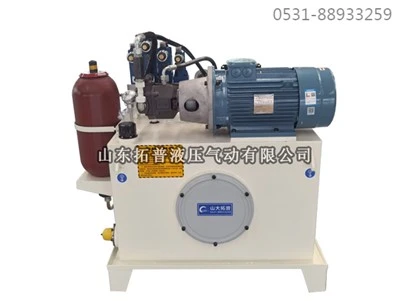
If you’re looking to upgrade your motion control system, reduce scrap, or improve your machine’s accuracy, we’re here to help. Don’t hesitate to reach out to our team to discuss your requirements, ask questions, or request more information on our electro-hydraulic servo valves and systems. We’re ready to work with you to find the right solution for your business.
Paper Machinery Industry References
- Merritt, H.E., Hydraulic Control Systems, John Wiley & Sons, 1967.
- Blackburn, J.F., Reethof, G., and Shearer, J.L., Fluid Power Control, MIT Press, 1960.
- Anderson, A., Servo Valves: Fundamentals and Applications, Fluid Power Journal, 2019, Volume 52, Issue 3.
- International Organization for Standardization, ISO 4406:2017, Hydraulic fluid power – Fluid contamination – Classification of code levels for solid contamination.
- Mattlin, K., “Advances in Electro-Hydraulic Servo Technology for Smart Manufacturing,” Manufacturing Engineering Society International Conference, 2021.
Shandong Huate Tuojiang Intelligent Equipment Co., Ltd.
As one of the leading manufacturers and suppliers of electro-hydraulic servo system in China, we’re featured by quality products and good price. Please rest assured to buy advanced electro-hydraulic servo system for sale here from our factory. Welcome to view our website for more information.
Address: Sino-German Cooperation Industrial Park, Licheng District, Jinan City, Shandong Province
E-mail: sdhttj01@163.com
WebSite: https://www.httjznzb.com/
