If you’ve ever shopped for furniture, cabinetry, or office shelving, chances are you’ve come across melamine board—affordable, versatile, and available in dozens of finishes that mimic wood grain, stone, and even bold solid colors. For years, I’ve worked as a melamine board supplier, and one question I get more than any other is: Does this material give off harmful substances? It’s a valid concern, especially since many people associate wood-based composite products with VOCs (volatile organic compounds) or formaldehyde, two substances that have made headlines for potential health risks. Today, I want to break this down not just as a vendor, but as someone who’s spent 15 years learning the ins and outs of how melamine board is made, tested, and regulated. Melamine Board
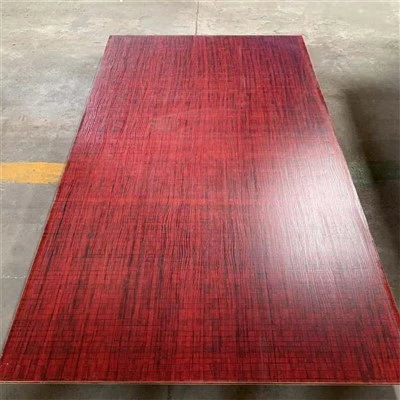
First, let’s clear up a common misconception: melamine board itself is not a single material—it’s a finished product made from a core substrate (usually particleboard, medium-density fiberboard, or MDF, or plywood) that’s coated with a layer of melamine resin and paper. The melamine layer is the decorative one, designed to be scratch-resistant, stain-resistant, and easy to clean. The potential for harmful emissions doesn’t come from the melamine coating, though; it comes from the substrate beneath it. That’s a key point most people miss. Melamine resin, when properly cured, is a thermoset plastic—meaning once it’s hardened, it doesn’t break down easily and doesn’t off-gas the way some other adhesives do.
Let’s talk about the substrate first. Particleboard and MDF are made by combining wood chips or fibers with formaldehyde-based adhesives to bind them into solid panels. Plywood uses similar adhesives, though it’s made in thinner layers glued together. Those adhesives are the source of any formaldehyde that might be released, especially in panels that aren’t manufactured to strict emission standards. But here’s where our expertise comes in: as a supplier, we only work with substrates that meet or exceed global regulatory standards for formaldehyde emissions. For example, in the U.S., that means CARB Phase 2 standards, which limit formaldehyde emissions to 0.09 parts per million (ppm) for composite wood products. In Europe, it’s the E1 standard, which caps formaldehyde at 0.124 ppm—both levels that are considered safe for indoor use by organizations like the Environmental Protection Agency (EPA) and the European Food Safety Authority (EFSA).
Wait, you might be wondering: what about VOCs? VOCs are a broad category of chemicals that include formaldehyde, benzene, and other compounds that can off-gas into indoor air. When people ask about harmful substances, they’re often referring to VOCs as a whole. Again, the melamine coating is a non-issue here. The melamine-resin surface is fully cured during manufacturing, so it doesn’t release significant amounts of VOCs. Any VOCs that might come from a finished melamine board would almost exclusively be from the substrate’s adhesive, and only if the substrate is low-quality or not properly tested. For that reason, we invest in third-party testing for every batch of melamine board we sell. We work with certified labs to measure both formaldehyde and total VOC (TVOC) emissions, and we reject any panels that don’t hit our strict thresholds—way below what regulatory bodies consider safe.
I’ve seen a lot of misinformation online, too: some blogs claim melamine board is a “toxic” material, while others say it’s perfectly safe without any caveats. The truth is, it’s somewhere in between—safety depends entirely on three factors: the substrate’s quality, the manufacturing process, and the final finishing touches on the product. Let’s break those down.
First, substrate quality: lower-grade particleboard or MDF made with cheap, high-formaldehyde adhesives will have higher emissions, no matter what melamine coating you put on top. We only source our substrates from mills that use urea-formaldehyde (UF) adhesives with low formaldehyde content, or even alternative adhesives like isocyanate-based ones that have far lower emission rates. Plywood, in particular, is a great choice for people who want even lower emissions, since its layered structure means less adhesive is used overall, and the melamine coating seals the remaining adhesive in tightly.
Second, manufacturing process: when the melamine coating is applied, it’s pressed onto the substrate under high heat and pressure—usually around 150 degrees Celsius and 1500 psi of pressure. This curing process is critical. If the melamine resin isn’t fully cured, it can off-gas small amounts of melamine itself, though that’s extremely rare in modern, regulated manufacturing. We test every batch for curing completeness to avoid this issue, and our factories follow ISO 9001 quality standards to ensure consistency.
Third, final finishing: many melamine board products are cut and shaped by furniture manufacturers, and the edges are left raw—exposing the substrate’s inner core. That’s where some emission can come from, right at the cut edges. To combat this, we recommend that any finished product made from our melamine board be edge-banded with PVC, wood veneer, or even another layer of melamine to seal those raw edges. It’s a simple step that almost eliminates any minor emissions that might come from the substrate. We share free edge-banding guides with all our clients, because we want them to get the safest possible end product.
Let’s put this in perspective with real-world data. The EPA states that formaldehyde levels in the average American home are between 0.02 and 0.6 ppm, but typical background levels (from carpets, paint, and other furniture) are around 0.05 ppm. CARB Phase 2’s limit of 0.09 ppm is already below that average, so a panel that meets CARB Phase 2 would contribute only a small, safe amount to indoor air. Our melamine board tests come in at an average of 0.04 ppm—less than half the regulatory limit and below typical home background levels. That means even in a small room with multiple pieces of our melamine board furniture, the total formaldehyde level would stay well within safe ranges.
I know some people still worry about melamine itself. Melamine is a nitrogen-based compound, commonly used in dinnerware, countertops, and fire-resistant materials. When it’s properly bound into the melamine resin coating, it’s not absorbed by the body, nor does it off-gas. The only time melamine is considered a health risk is if it’s ingested in very large quantities, like the 2008 Chinese milk scandal, where it was illegally added to dairy products to fake higher protein levels. That’s a completely different scenario from using melamine board for furniture—there’s no risk of ingestion, and the cured resin doesn’t leach into food (unlike some uncoated composites). In fact, melamine board is often used for kitchen cabinets and kids’ furniture specifically because it’s non-toxic when cured.
Now, let’s address common use cases. Many of our clients are small furniture makers, interior designers, and even home renovators who choose melamine board for its affordability and durability. For a small business launching a line of budget-friendly cabinets, melamine board is a smart choice because it’s easy to work with and doesn’t require the high cost of solid wood. For a family building a playroom, our certified low-emission melamine board is a safe option that stands up to spills, scrapes, and regular use. We’ve even supplied melamine board to schools and daycares, where air quality is a top concern, and we’ve passed all required safety inspections for those projects.
Of course, no material is 100% emission-free. Even solid wood gives off small amounts of VOCs, and natural wood itself can contain trace amounts of formaldehyde from the tree. The key is to choose a product that’s tested and certified to have emissions below what’s considered safe. That’s why as a supplier, we don’t just sell panels—we provide full test reports for every order, so our clients can see exactly what they’re working with. We also offer guidance on installation best practices, like letting new furniture air out for a few days before bringing it into a closed space, which helps dissipate any minor residual odors that might be present.
I’ve been in this industry long enough to see trends come and go, and right now, more and more people are asking about sustainable, low-emission materials. That’s why we’ve invested in a line of FSC-certified melamine board, made from sustainably harvested wood cores, with even lower emission rates than our standard panels. We work with suppliers who are committed to reducing their carbon footprint, and we offer carbon-neutral shipping for all our orders to align with our clients’ environmental goals.
One of the most common questions I get from first-time buyers is: How do I know I’m getting a non-toxic melamine board? The answer is to look for certifications. In the U.S., look for CARB Phase 2 or TSCA Title VI compliance. In Europe, E1 or F**** certification (the highest formaldehyde standard for composite wood products). Global GreenTag and Greenguard certifications are also good indicators that a product has been tested for low emissions and is safe for indoor use. If a supplier can’t provide third-party test reports, that’s a red flag. We’re happy to send test reports for any batch, any time—no hoops to jump through.
Let’s also debunk a myth about “new furniture smell.” A lot of people think that smell means harmful emissions, but that’s not always the case. The smell from new furniture can come from a number of sources, including melamine board, paint, adhesives, or even the plastic wrapping on some products. With our melamine board, any residual smell is very mild and dissipates within 48 hours of being unpacked and aired out. For context, solid wood furniture often has a stronger, woody smell that takes longer to fade, but that doesn’t mean it’s more toxic. It’s just a different material.

So, to circle back to the original question: Does melamine board emit harmful substances? The short answer is, when it’s manufactured to strict regulatory standards, tested for low emissions, and properly finished, no. The risks come from low-quality, untested panels that use high-formaldehyde adhesives, not from the melamine coating itself. As a supplier, our job is to give our clients transparency, quality, and peace of mind that the products we provide are safe for their homes, their businesses, and their families.
H20 Beam If you’re a furniture maker, interior designer, or homeowner looking for reliable, low-emission melamine board, we’re here to help. We offer a wide range of finishes, from matte to high-gloss, in every color you can imagine, and we’re committed to providing the support and testing you need to make the right choice for your project. Whether you have questions about emissions, need help choosing a substrate, or want to place an order, reach out to our team to learn more. We don’t just sell panels—we build long-term relationships based on trust, and we’re always happy to walk you through every step of the process.
References
- U.S. Environmental Protection Agency. (2023). “Formaldehyde and Composite Wood Products.”
- California Air Resources Board (CARB). (2024). “Composite Wood Products Regulation: Phase 2 Formaldehyde Emission Limits.”
- European Commission. (2022). “E1 Standard for Formaldehyde Emission from Wood-Based Panels.”
- Greenguard Environmental Institute. (2023). “Indoor Air Quality Standards for Building Materials.”
- U.S. Environmental Protection Agency. (2022). “Volatile Organic Compounds (VOCs) in Indoor Air.”
Lisen Wood Industrial Shouguang Co., Ltd.
Lisen Wood Industrial Shouguang Co., Ltd. is one of the most professional melamine board manufacturers and suppliers in China, featured by quality products and low price. Please rest assured to buy discount melamine board from our factory. Welcome to contact us for quotation and free sample.
Address: Nongsheng road, shouguang,shandong province, china
E-mail: liuzhenxi@lisenboard.com
WebSite: https://www.sglswood.com/
