As a test equipment supplier who’s spent nearly two decades talking to labs, manufacturing teams, and quality control managers, one question comes up more often than “How much does this cost?” or “When can we get delivery?”: “How long will my test equipment actually last?” It’s a fair question—test equipment is a big investment, no matter if you’re a startup outfitting your first R&D lab or a Fortune 500 factory with a hundred bench-top units running 12-hour shifts. Too many teams either write off equipment after a few years because of outdated tech, or stretch it so far past its useful life that it starts giving inconsistent data, leading to product recalls, compliance failures, or even safety hazards. Test Equipment
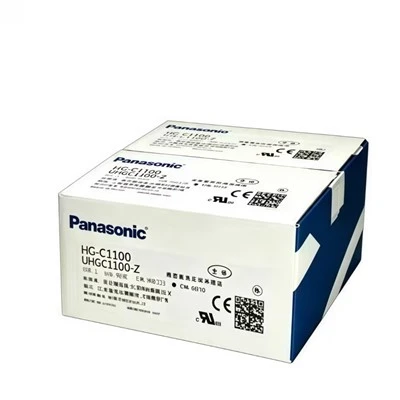
Let’s start with the basics: “lifespan” isn’t a one-size-fits-all number. It’s not like a lightbulb, where it’s either on or burnt out. For test equipment, lifespan breaks down into two key categories: technical lifespan and operational lifespan. Technical lifespan is how long the hardware and core components stay functional without frequent, costly repairs. Operational lifespan is how long the equipment still meets your needs, whether that’s for accuracy, speed, compliance, or compatibility with new software or test protocols. That’s where most teams run into confusion—they might have a machine that works, but it can’t test the new product line you launched last year, so it’s functionally obsolete long before the motherboard or display gives out.
First, let’s talk technical lifespan. For most of the equipment we supply—think oscilloscopes, signal generators, environmental chambers, and test and measurement (T&M) tools—the average technical lifespan is 10 to 15 years. But that number shifts a lot based on how the equipment is used, maintained, and stored. A test unit that runs 24/7 in a factory’s quality control department, exposed to dust, temperature swings, and occasional power surges, will have a shorter technical life than one that’s used once a week in a temperature-controlled R&D lab. We’ve seen oscilloscopes from the 1990s still working in labs because they’re rarely used, and we’ve had to service a signal generator that died after four years because it was part of a high-volume production line with no routine maintenance.
Maintenance is the biggest factor here. Routine calibration, cleaning, and component checks don’t just keep equipment accurate—they prevent small issues from turning into catastrophic failures. For example, an environmental chamber used to test battery packs will have humidity sensors that drift over time. If you calibrate those sensors every six months, you can extend the chamber’s life by 5-7 years. Skip calibration, and those drifted sensors will produce bad test data, and eventually, the humidity control system will burn out from overworking to correct the drift. We recently worked with a medical device manufacturer that had a 12-year-old test chamber. They’d never skipped a calibration, and even though it had minor wear on the door seal, it passed every compliance audit and still produced data within 0.5% of its original accuracy. If they’d skipped calibrations, they would have had to replace it three years earlier.
Then there’s operational lifespan, which is where things get trickier. This is the part that has nothing to do with broken parts and everything to do with your business. Operational lifespan for test equipment is typically 5 to 10 years, sometimes shorter, depending on industry and regulatory changes. Let’s break that down by common use cases.
In semiconductor manufacturing, for example, test equipment has an operational lifespan of 5 to 7 years. Why? Because semiconductor tech evolves so fast. A test tool that works on 10nm chips won’t work on 3nm chips—you need faster signal processing, higher resolution sensors, and compatibility with new test protocols. If you’re making semiconductors, staying current with test equipment is non-negotiable to keep up with competitors. We had a client a few years ago who tried to stretch a 6-year-old semiconductor tester past its operational lifespan. They were developing a new line of microchips, and the old tester couldn’t handle the smaller pin pitches, leading to 15% more failed tests, extra rework, and eventually, a delay in their product launch that cost them millions.
For medical device manufacturers, operational lifespan is tied to regulatory compliance. The FDA, ISO, and other global bodies update their testing standards every few years. A test machine that meets ISO 17025 requirements today might not meet the 2030 update—so even if it works perfectly, you have to replace it to stay compliant. We recently supplied a group of pacemaker manufacturers with new electrical safety testers because the old models couldn’t handle the new IEC 60601-1-8 standard for noise immunity. The old testers were only 7 years old, but their operational lifespan was over because of the regulatory change. It’s not just about the equipment working—it’s about it working in a way that’s legally allowed for your industry.
Even in less regulated industries, like consumer electronics, operational lifespan is shrinking. New products—foldable phones, wireless earbuds, electric vehicles—require more complex tests, from flexible material durability to battery life cycling. A 10-year-old drop tester might work fine for testing a 2010 smartphone, but it can’t handle the impact testing for a 2024 foldable screen, which requires controlled, precise impacts at multiple angles. That’s when a machine that still turns on is functionally useless for your work.
Wait, but what about all the old test equipment you see on eBay or in garage sales, from the 1980s and 1990s? Those are often T&M tools—oscilloscopes, multimeters, spectrum analyzers—that people use for hobbyist projects, small labs, or as backup equipment. For those, the operational lifespan can be 20 years or more, because the test protocols for basic electronics haven’t changed that much. You don’t need a new multimeter to test a 5V Arduino, so a 30-year-old unit works just as well. But that’s a different use case than high-volume manufacturing or regulated industries—so it’s important to match your equipment’s lifespan to your actual needs.
Another factor that affects both technical and operational lifespan: software compatibility. Modern test equipment relies on software to run tests, store data, and integrate with your company’s ERP or quality management system (QMS). Manufacturers stop supporting software for older equipment after 5 to 10 years. That means you might not get security updates, bug fixes, or the ability to connect to your new lab management tools. A lot of teams don’t realize this until they try to upgrade their QMS and can’t get their old test equipment to share data. We had a food manufacturing client who was audited for food safety last year. Their 8-year-old moisture analyzers worked, but they couldn’t export test data directly to their new QMS—so they had to manually enter 6 months of data, which took 100+ hours and led to a small fine for missing documentation.
Now, let’s talk about how you can extend both the technical and operational lifespan of your test equipment, because that’s what really matters for your bottom line. First, invest in preventive maintenance—don’t wait for a machine to break before you call a service technician. Many suppliers, including us, offer calibrated maintenance plans where we come in, check components, calibrate sensors, and replace wear parts (like seals, fans, and cables) before they fail. A $500 annual maintenance plan for a $5,000 test equipment saves you thousands in emergency repairs and replacement costs.
Second, plan for upgrades, not just replacements. A lot of modern test equipment has modular components—you can upgrade the software, add new sensors, or tweak the test firmware to meet new standards, instead of buying a whole new unit. For example, we sell a line of environmental chambers that let you upgrade the humidity control system or add a UV exposure module a few years down the line, instead of replacing the entire chamber. That can extend operational lifespan by 3 to 5 years, and it’s usually 50% cheaper than a new unit.
Third, align equipment purchases with your long-term business goals. If you’re a startup that plans to launch new products every 2 years, don’t buy a test machine with a 10-year operational lifespan—buy one with a modular design that’s easy to upgrade. If you’re a medical device company that will be in compliance for the next 15 years, invest in equipment that’s designed to meet upcoming regulatory changes, so you don’t have to replace it when standards update.
I want to be clear: I’m not here to tell you to replace your equipment every 5 years, or to sell you the latest, most expensive machine. Far too many suppliers push unnecessary replacements, and that’s not fair to our customers. We’ve had clients use our equipment for 12 years because they maintained it and upgraded the software, and that’s a win for them and for us. But we also work with clients who waited too long to upgrade, and they ended up with inconsistent test data, compliance issues, or costly delays. The key is to understand what your equipment needs to do, how long you need it to do it, and how to get the most out of it without wasting money.
Let me share a real example that stuck with me. A small aerospace components manufacturer came to us last year. They had two 10-year-old vibration testers that they’d used for testing small aircraft parts. They’d maintained them regularly, and they worked fine—until they got a contract to test new parts for a commercial jet. The old vibration testers couldn’t replicate the exact frequency ranges and load requirements the new parts needed. They thought they’d have to spend $80,000 on new units, but we were able to upgrade their existing testers with new frequency generators and load sensors for $15,000. That extended their operational lifespan by another 7 years, and they kept the money they would have spent on replacement for other parts of their production line.
On the flip side, another client, a battery manufacturer, tried to stretch a 6-year-old cycler past its operational lifespan. They were testing new EV batteries, and the cycler couldn’t handle the high current cycles needed for long-range EVs. They ended up with 20% of their test results being inaccurate, which led to a batch of batteries that didn’t meet safety standards. They had to recall 1,000 batteries, which cost them $200,000 in damages and lost reputation. If they’d replaced the cycler when it reached the end of its operational lifespan, that recall never would have happened.
So what’s the takeaway? The lifespan of test equipment isn’t a number you can pull off a spec sheet. It’s a balance between how well you care for the equipment, what you need it to do, and how long your business will need it. Technical lifespan is about hardware and functionality—how long the machine doesn’t break. Operational lifespan is about relevance—how long the machine works for your specific tests, standards, and products.
For most teams, here’s a rough rule of thumb: if your equipment is working, meets your current standards, and can connect to your software and QMS, it’s still useful. If it’s giving you bad data, can’t meet new regulatory requirements, or can’t handle your new products, it’s time to look at upgrades or replacements. And don’t forget that regular maintenance and strategic upgrades are way cheaper than emergency repairs or costly delays from outdated equipment.
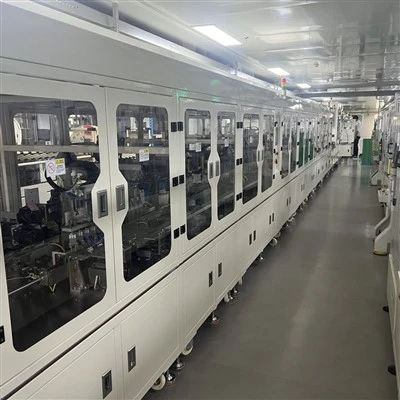
If you’re not sure where your test equipment stands—whether you’re wondering if it’s time to upgrade, if it’s being maintained correctly, or if you’re investing in the right equipment for your long-term goals—we’re here to help. We work with teams of all sizes, from startups to Fortune 500, to assess their test equipment needs, extend the life of what they already have, and find solutions that fit their budget and timeline. Whether you’re looking to maintain your current equipment, upgrade existing units, or purchase new test tools, we can walk through your specific needs, answer questions, and help you make the best choice for your business. Don’t hesitate to reach out to us to schedule a consultation to discuss your test equipment needs.
Rear Testing Production Line References
- International Organization for Standardization (ISO). ISO 17025:2017 General requirements for the competence of testing and calibration laboratories.
- Institute of Electrical and Electronics Engineers (IEEE). IEEE Standard for Test Equipment Life Cycle Management.
- U.S. Food and Drug Administration (FDA). Guidance for Industry: Test Equipment Validation and Maintenance for Medical Device Manufacturers.
- SEMI International. SEMI E10 – Guide for Definition of Equipment Life Cycle and Availability.
- NIST. Calibration Practices and Extending Test Equipment Operational Lifespan, 2022.
Yangning (Xiamen) Intelligent Technology Co., Ltd.
With abundant experience, we are one of the most professional test equipment manufacturers in China. As we have world-leading production equipment and strong manufacturing capabilities, we warmly welcome you to buy bulk advanced test equipment from our factory. Customized orders are welcome.
Address: Room 307-2, No. 15 Duiying Road, Software Park Phase III, Torch Hi-Tech Zone, Xiamen, Fujian, China
E-mail: mia@ynautos.com
WebSite: https://www.ynautos.com/
