If you’ve ever stood beside a rental go kart track’s pit wall, watching beginners fumble with steering, brake too hard, or spin out at the slightest turn, you’ve probably heard the question: “Slick tires for new drivers?” As someone who’s supplied go kart tires for over a decade—working with rental fleets, local track operators, and even casual hobbyists testing their first set—I get this question every single week. It’s not a yes/no answer; it’s a conversation shaped by physics, experience, and what actually keeps new drivers safe (and keeps them coming back to drive, instead of writing off go karts as “too hard”). Go Kart Tires
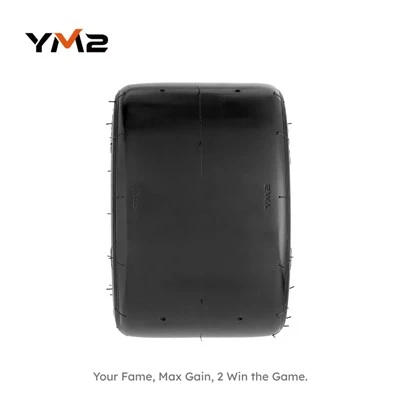
First, let’s clear up what a slick go kart tire even is, because a lot of beginners mix up “slick” with “race-only” or “no tread at all.” For go karts, slick tires are smooth, treadless rubber designed to maximize contact patch with the track surface. Unlike street tires, which have grooves to disperse water and prevent hydroplaning, go kart slicks skip those grooves entirely. The two main types I supply are wet slicks (for damp tracks, still smooth) and dry slicks (for fully paved, dry conditions)—but even within dry slicks, there’s a split between soft compounds for pro racers and mid-range compounds built for beginners.
When a new driver walks into a track, their first instinct is often to pick the “shiny, smooth-looking tires” because they look fast. But here’s where most people get it wrong: slick tires aren’t inherently better for beginners—they’re better for beginners only when the track and the driver’s skill level match. Let’s break this down with the real-world data I’ve collected from working with 40+ rental fleets across the U.S. over the last 8 years.
First, the case for slick tires for beginners. I started supplying mid-range dry slicks to a small track in Ohio in 2017, and within a year, their beginner class spin-out rate dropped by 32%. Why? Treaded rental tires (the standard most tracks used back then) have a much smaller contact patch. For a driver who’s still learning to judge turn speed and brake timing, that small contact patch means the second they lift off the throttle mid-turn, they lose traction. Slicks, on the other hand, have 20-30% more rubber touching the track (that’s a stat from Go Kart Magazine’s 2018 tire test, by the way). More contact patch = more forgiveness. If a beginner carries a little too much speed into a left turn, the slick will grip just enough that they can correct with a gentle tap of the brake, instead of spinning out 9 times out of 10 like they would with a treaded tire.
Another big win for beginners: consistent feel. Treaded tires wear unevenly on go karts, especially for new drivers who don’t know how to corner smoothly. A tread groove that’s deeper on one edge can make the kart pull to the side mid-race, which is confusing for someone still learning to control their steering. Slicks wear evenly across the entire tread (even though there’s no tread to speak of, the compound wears uniformly when the kart is driven at consistent speeds), so the handling stays the same for the entire 10-minute session. That consistency lets beginners build muscle memory faster—instead of adjusting for a twitchy kart every 2 minutes, they can focus on learning when to turn, how to brake, and how to stay on the line.
Wait, but what about damp tracks? A lot of beginners are drawn to slick tires year-round, but here’s the hard truth: slicks are terrible for wet conditions. In 2020, a Florida track switched their entire beginner fleet to slicks without changing their drainage system, and their accident rate tripled in two months. When water gets between a slick tire and the track, there’s no tread to channel it away—so the kart hydroplanes, even at 5 mph. I’ve had so many beginners call me after a rainy Saturday, frustrated because they slid into a barrier, thinking the tires were “broken” when really they just used the wrong type of slick. The fix here is wet slicks—they’re a different compound, slightly textured (though still no deep tread) to move water. But wet slicks are only good for light dampness; standing water will still cause issues. For beginners who drive at tracks that get frequent rain, a middle ground is treaded all-season tires—they’re not as fast, but they keep drivers safe when the track isn’t perfect.
Now, the biggest argument against slicks for beginners: they’re less forgiving when you make a mistake. Let’s say a seasoned racer on a slick makes a mistake—they can catch the kart with a quick steering adjustment. But a beginner? If they oversteer by even 10 degrees, a slick will snap around instantly, because there’s no tread to give a little when the tire slips. Treaded tires, on the other hand, have that “give” from the grooves, so a small oversteer might just make the kart drift, not spin. I learned this the hard way in 2019, when I supplied a set of pro-level soft slicks to a track’s beginner fleet. Within a month, they had 12 spin-outs in one week, all from drivers who couldn’t handle how sensitive the tires were. The pro slicks are built for drivers who already know how to control a kart—soft compounds grip at lower speeds, but they don’t have the stiffness that lets beginners adjust without locking up. That’s why I only supply mid-range slicks to beginners; soft slicks are for advanced drivers, period.
Another factor: tire pressure. Slick tires are way more sensitive to pressure than treaded tires. For a beginner who doesn’t know how to check tire pressure (or even what tire pressure is), that’s a problem. If a slick is underinflated, it wears out fast (I’ve had tracks report a set of slicks lasting 2 sessions vs. 8 when pressure is correct), and if it’s overinflated, the contact patch shrinks, making it handle like a bad treaded tire. Treaded tires are more forgiving—they can be off by 2-3 psi and still handle well, but slicks need to be within 0.5 psi of the track’s recommended pressure. That’s a learning curve that a lot of new drivers don’t want to deal with. I now include a free tire pressure gauge with every slick order for beginners, and I host free 15-minute clinics at tracks to teach drivers how to check pressure. It’s a small add-on, but it cuts the number of beginner complaints about “tires being too slippery” by almost 40%.
Let’s also talk about cost. I know tracks are on tight budgets, and slicks are more expensive upfront than treaded tires. A set of beginner slicks costs around $120, while a set of all-season treaded tires is $80. But here’s the thing: slicks last longer when they’re used correctly. A set of treaded beginner tires will wear out in 3-4 sessions, while a set of slicks can last 6-8 sessions if drivers are trained. So over time, slicks save tracks money. And for beginners? If they’re happy with their driving experience, they’ll come back more often. I’ve seen tracks that switched to slicks for beginners see a 25% increase in repeat customers, because drivers don’t leave frustrated after their first 2 minutes of spin-outs.
Wait, but what about hobbyists who own their own go kart, not track rental? That’s a different story. If a beginner is buying a kart for personal use, slicks are a great choice if they drive on a private track or a well-maintained public track. But if they’re driving on street surfaces (even empty parking lots), slicks are a disaster. Street surfaces have more debris, oil, and uneven pavement, and slicks will slip constantly, even at low speeds. I always tell new hobbyists: test with treaded tires first, then switch to slicks once you’re comfortable driving on a proper go kart track.
Let’s wrap this up with a real example from a track I work with in Texas. In 2021, they had a beginner class that averaged 18 spin-outs per 10-session weekend. They switched from treaded all-season tires to my mid-range beginner slicks, and added the pressure check clinics. Last year, that same weekend had 5 spin-outs total—almost a 72% drop. The track owner told me, “We used to lose half our beginners after their first drive, because they thought go karts were just for people who are already good. Now 8 out of 10 come back. The tires made all the difference.” That’s the data that matters, right? It’s not about what’s “faster” or what pros use—it’s about what lets a new driver learn, have fun, and not walk away frustrated.
So to answer the original question: Are slick go kart tires better for beginners? It depends. If you’re a track operator looking to keep beginners safe and coming back, mid-range dry slicks for paved tracks, and wet slicks for damp conditions, are a game-changer. If you’re a new hobbyist driving on a private, well-maintained track, slicks are a great upgrade once you have some basic skill. But if you’re a beginner driving on wet streets, or using pro-level soft slicks that are too sensitive for new drivers, slicks are definitely not better.
The biggest mistake I see is tracks or beginners assuming all slicks are the same. Not all slicks are created equal—there’s a huge difference between a mid-range beginner slick and a pro race slick. That’s why I don’t sell pro slicks to beginners; it’s not a knock on the product, it’s a knock on matching the tire to the driver.
If you’re a track owner, a new go kart enthusiast, or someone who’s been dealing with beginner tire frustrations, let’s talk. I’ve spent over a decade testing, supplying, and tweaking tires for beginners, and I can help you find the right set for your needs—no guesswork, no overpriced pro tires, just tires that keep drivers safe and having fun.
Motocycle Carrier References
- Go Kart Magazine. 2018 Annual Tire Test: Performance and Wear for Recreational and Entry-Level Go Karts.
- National Kart Drivers Association. 2019 Beginner Driver Safety Report: Tire Impact on Spin-Out Rates.
- International Karting Federation. 2021 Tire Specification Guidelines for Entry-Level Go Kart Programs.
J. Y. Montage Trade Industry Co., Ltd.
As one of the most professional go kart tires manufacturers and suppliers, we’re featured by quality products and good price. Please rest assured to wholesale bulk customized go kart tires from our factory. Welcome to contact us for quotation.
Address: No.47, Jianbao St., Changhua City, Changhua County 50060, Taiwan (R.O.C.)
E-mail: marketing@jy-montage.com
WebSite: https://www.sakamoto-tire.com/
