If you’ve ever spent time scrolling through salvage yards or online listings for a salvage Dodge—whether it’s a classic Charger from the 70s, a durable Ram 1500 work truck, or a compact Dodge Caliber that’s seen better days—you know the biggest hurdle isn’t finding the vehicle itself. It’s sourcing parts that actually fit without wasting money on ill-fitting replacements or risking long-term reliability. For over a decade, I’ve run a Dodge-specific parts supplier that works exclusively with salvage Dodge vehicles, and I’ve helped thousands of mechanics, backyard tinkerers, and Dodge owners skip the guesswork and get parts that fit perfectly. Let’s break down the process step by step, based on what I’ve learned from working with salvage vehicles every single day. Fit for DODGE

First, let’s talk about why Dodge parts for salvage vehicles are uniquely tricky. Unlike some brands that use a handful of consistent platforms across their lineup, Dodge has always built vehicles for specific use cases, with generational changes that often alter even seemingly basic components. A 2018 Dodge Challenger, for example, uses a different rear hub assembly than a 2008 model, even though both look nearly identical from the outside. A salvage Dodge that was in a front-end collision might have a fender that looks like it should work for a 2014 Dart, but if that Dart is a Sport trim vs. a base SXT, the mounting brackets are totally different. That’s where so many people go wrong: they search for “Dodge parts” without narrowing it down to the exact salvage vehicle’s specifics.
Let’s start with the basics you need to confirm before you even start searching for parts. The first number you need is the 17-digit VIN (Vehicle Identification Number) of your salvage Dodge. I can’t stress this enough—don’t rely on just the year, make, and model when listing your part needs. The VIN will tell you the exact trim level, engine size, transmission type, and even the specific production batch (some Dodge models had mid-year part changes that aren’t tied to the model year). If your salvage Dodge is totaled and you don’t have the VIN, you can often find it on the salvage title, or sometimes in the vehicle’s door jamb, dashboard, or engine bay. For example, a Ram 1500 from 2019 with a 5.7L Hemi and 2WD will have different oil pan specs than a 3.6L V6 4WD model from the same year, and mixing those up will lead to hours of extra work.
Next, document the damage on your salvage vehicle in detail. When a Dodge is salvaged, damage can be uneven even within the same model line. A Charger that was in a rear-end collision will need a trunk lid, rear bumper, and maybe rear quarter panel, but you’ll also need to check if the tow hitch (if it had one) is compatible, or if the fuel tank is intact and matches your model’s fuel capacity. If the salvage Dodge was side-swiped, you’ll need to know if the door has built-in side airbags, which many Dodge models after 2010 did, and those airbags aren’t interchangeable between trim levels. I always tell my customers to take photos of every damaged part, even small ones like door handles or signal mirrors, because that will help you cross-reference parts accurately.
Once you have your VIN and damage details, it’s time to narrow down where to look for parts, and how to vet those parts to make sure they fit. Let’s start with salvage yards first, since that’s where most people look for low-cost Dodge parts. Not all salvage yards are created equal, especially when it comes to Dodge-specific inventory. A general salvage yard might have a pile of Dodge parts, but they might not have cataloged them by year, trim, or engine, so you could end up driving 2 hours only to find a part that doesn’t fit. My advice is to find salvage yards that specialize in domestic vehicles, specifically Dodge, Chrysler, and Jeep (since they share many platform parts). These yards will have their Dodge inventory organized by VIN or model year, and they’ll often let you check the part’s compatibility before you buy. For example, a Ram pickup-specific salvage yard will have separate sections for 1500, 2500, and 3500 models, and they’ll note if a transmission is manual or automatic, which is a huge detail for fit.
Another option is online salvage parts marketplaces, which are perfect for salvage Dodge vehicles, but only if you use them correctly. Sites that list used auto parts let you search by VIN, which is a game-changer for Dodge. When I built my supplier, I made sure our inventory is all Dodge-specific, and every single part listing has the VIN of the donor salvage vehicle, so customers can plug their own VIN and instantly see if it’s a match. But a lot of general marketplaces don’t do that—they just list “2017 Dodge Caravan bumper” without noting if it’s a lower trim or has parking sensors. That’s why you have to double-check the part’s features against your salvage Dodge. If your Caravan has parking sensors, make sure the part listing mentions sensor compatibility; if it has a tow package, confirm the part doesn’t block the hitch.
Now, let’s talk about the most common mistake I see when people source parts for salvage Dodges: assuming older model parts fit newer ones, or vice versa. Dodge made major platform shifts for many models in the 2000s and 2010s, and those shifts affected parts that people would never guess. For example, the Dodge Grand Caravan was redesigned in 2008, and while it looks almost the same as the 2007 model, the front suspension components changed entirely. A 2007 Grand Caravan strut won’t fit a 2008 model, even if you force it. Another example: the Dodge Charger switched to rear-wheel drive in 2006, so parts from a 2005 front-wheel-drive Charger (which was a discontinued model, but sometimes sold used) will not fit a 2006 or newer RWD Charger. If your salvage Dodge is a classic, like a 1970s Dart or Challenger, this is even more important—parts from a 1972 Dart won’t fit a 1976 Dart, because Dodge updated the frame dimensions for safety standards in the mid-70s.
When you’re vetting parts, always ask for specific details, not just “fit for Dodge”. A good Dodge-specific supplier will tell you the exact donor vehicle details for every part: VIN of the salvage car, trim level, engine size, transmission type, and even the part’s condition. For example, a radiator for a Dodge Ram 2500 diesel is not the same as a radiator for a Ram 1500 gas model, and a reputable supplier will note that, whereas a general seller might just say “fits Dodge Ram”. At my company, we go a step further: we test every part for functionality before we list it, and if a part is from a salvage vehicle that was in an accident, we note what damage the original vehicle had, so you can be sure you’re not buying a part that’s already damaged or modified incorrectly.
Another pro tip for salvage Dodge vehicles: cross-reference OEM part numbers, not just model names. Every Dodge part has a unique OEM (Original Equipment Manufacturer) part number, and that number never changes, even if the model year changes. For example, if you need a door handle for your 2015 Dodge Challenger, you can find the OEM part number in your owner’s manual, or on the back of the existing door handle on your salvage car, and then search for that exact number. This eliminates almost all guesswork. I recommend writing down the OEM part number for every damaged part on your salvage Dodge, and keeping that handy when you’re searching for parts. I’ve had customers come to me with a part number for a 2018 Dodge Journey taillight, and we can instantly match it to the exact donor salvage vehicle, so they know it will fit, no returns needed.
What about parts that aren’t easy to find for older salvage Dodges? Classic Dodge models from the 60s, 70s, and 80s are very popular for restomods and repairs, but their parts are often scarce. For these, I recommend joining Dodge-specific salvage communities—online forums, Facebook groups, or local Dodge clubs that specialize in vintage models. These communities often have members who part out their own salvage Dodges, and they know the exact details of every part, since they worked on the vehicle themselves. For example, a friend of mine who restores 1969 Dodge Chargers found a rare door panel for his salvage vehicle through a local club, and the member who sold it knew it fit exactly because he owned a 1969 Charger for years. The key here is to avoid buying parts from a seller who only knows “this fits a Dodge” — they might not realize that a 1969 Charger R/T has different interior trim than a base 1969 Charger.
When you’re buying parts for a salvage Dodge, safety should always be your top priority, especially for critical parts like brakes, steering components, and airbags. Many salvage yards and online sellers will sell used brake calipers or steering racks, but they might not mention that the part was damaged in an accident, or that it’s from a salvage vehicle that had high mileage (which can mean worn-out parts). At my supplier, we test all critical safety parts for functionality, and we disclose any wear and tear honestly—we never sell a brake caliper that’s leaking, or a steering rack that has play, to someone working on a salvage Dodge. If a part is too worn to be safe, we’ll tell you, so you can either buy a new aftermarket part or look for a better salvaged option.
Now, let’s talk about common pitfalls to avoid. First, don’t be tempted to buy cheap “universal” Dodge parts from big-box auto stores. These parts are made to fit multiple models, but they almost never fit salvage Dodges as well as OEM or exact salvaged parts, and they can cause damage down the line. For example, a universal air filter that fits a Dodge Neon might not seal properly, leading to dirt getting into the engine, which is a huge problem for a salvage Dodge that’s already had a hard life. Second, don’t assume that all parts from a single salvage Dodge are good. If you’re buying multiple parts from a yard that parted out a Dodge, check each part individually—one part might be in perfect condition, while another is rusted or damaged from the same accident. At my company, we pull parts from salvage Dodges only after the vehicle has been inspected, and we categorize each part by condition, so you know exactly what you’re getting.
Finally, if you’re still struggling to find the right part for your salvage Dodge, don’t hesitate to reach out to a Dodge-specific supplier like the one I run. We work exclusively with salvage Dodge vehicles, so we know the ins and outs of every model, trim, and production year. We can help you cross-reference VINs, OEM part numbers, and donor vehicle details, so you don’t waste time or money on parts that don’t fit. Every part in our inventory is guaranteed to fit your specific salvage Dodge, because we match every detail—trim, engine, transmission, and production batch—before we ship.
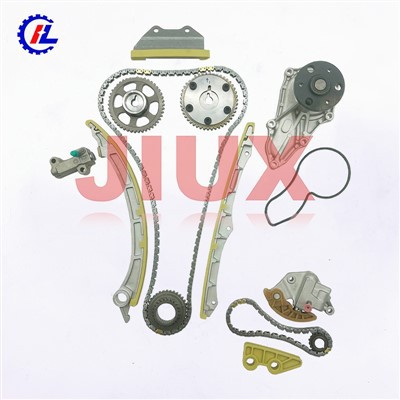
If you’re working on a salvage Dodge and need reliable parts that fit perfectly, we’re here to help. Let’s connect to discuss your specific vehicle and part needs today.
Camshaft Adjustment Valve References
- Dodge Official VIN Decoder Guidelines, Stellantis North America, 2024
- "Salvage Vehicle Part Compatibility: Key Considerations for Domestic Models", Auto Parts Recycling Association, 2023
- Dodge Model Platform Changes 2000–2020, Mopar Official Parts Catalog, 2022
- Safety Standards for Used Auto Parts, National Highway Traffic Safety Administration, 2021
Huzhou Hongli Auto Parts Co., Ltd.
With abundant experience, we are one of the most professional fit for dodge manufacturers in China. Please rest assured to buy customized fit for dodge at competitive price from our factory. If you have any enquiry about cooperation, please feel free to email us.
Address: Building 16, No.50/Building 18, No.58, Dadongwu, Lianshi Town, Nanxun District, Huzhou, Zhejiang, China
E-mail: jiux@timingkit.cn
WebSite: https://www.jiuxkit.com/
