If you’ve ever waited for a package to arrive and wondered how it got from a warehouse in Cincinnati to your doorstep in Boise in just two days, odds are a slider sorter was part of the answer. As the lead engineer at an automated sorting systems supplier that’s spent the last 12 years designing, installing, and maintaining these systems for e-commerce, parcel, and third-party logistics (3PL) providers across North America, I get asked this question at every trade show, every client site visit, and even at backyard barbecues (my neighbor, a former Amazon operations manager, grilled me about it last summer). Most people have never heard the term, but once I break down how a slider sorter works, they’re quick to connect the dots to that seamless, almost invisible process that keeps our packages moving. Automated Sorting System
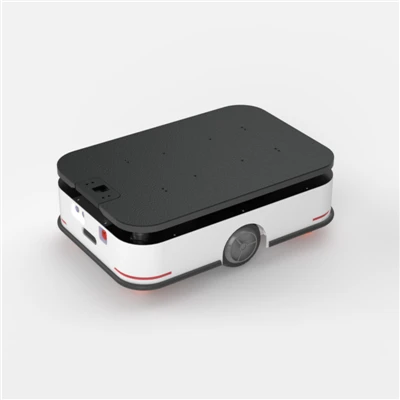
Let’s start with the basics: a slider sorter is a type of high-speed conveyor-based sorting system, built to handle thousands of items per hour, that uses small, individually tilted sliders embedded in the conveyor bed to push items off the main line and into designated chutes or destination lanes. It’s not the oldest sorting tech—we still work with clients who have older cross-belt sorters and even swing-arm sorters—but it’s become the workhorse of modern logistics for good reason. Unlike earlier systems, which struggled with mixed item sizes, shapes, and weights, slider sorters are versatile enough to handle everything from small envelopes and flat poly mailers to shoe boxes, 50lb pallets (well, almost pallets, we usually split bulk items across smaller chutes) and even irregularly shaped items like yoga mats or gardening tools without causing jams.
To understand how it works, imagine a standard conveyor belt, but instead of a flat, unbroken surface, the top of the belt is lined with hundreds of small, plastic or metal sliders, each about the size of a credit card, spaced just an inch or two apart. Each slider is mounted on a hinge that lets it tilt 30 to 45 degrees to the left or right, or stay flat, as it travels along the main line. Here’s where the intelligence comes in: every item that enters the system is first scanned by a combination of barcode readers, RFID sensors, and even 3D vision cameras. These tools capture critical data—whether that’s a UPS tracking number, an e-commerce order ID, a ZIP code, or even the item’s size and weight. That data is fed into the system’s central control software, which maps each item to a specific chute or destination lane.
When an item reaches the exact point along the conveyor line where its assigned chute is located, the system sends a signal to the corresponding sliders on that side of the line. Those sliders tilt upward at the exact right moment, acting like tiny ramps that push the item off the main conveyor and into the chute, which is angled to carry it away to the next step in the process—whether that’s a loading dock for final delivery, a storage area, or a packing station. The whole process happens in milliseconds. On a high-volume line, we’re talking 15,000 to 20,000 items per hour, which is roughly double the capacity of a manual sort, and it rarely makes a mistake. We measure our error rate at less than 0.1% for most standard items, which is a game-changer for clients who can’t afford mis-sent packages, delayed orders, or the cost of manual re-sorting.
A common misconception I hear is that slider sorters are too big or too expensive for small operations. That’s changing fast, thanks to advances in modular design that we’ve built into our own systems. Ten years ago, a slider sorter that handled 5,000 items per hour would have taken up 40 feet of floor space and cost six figures, out of reach for 3PLs with just one or two warehouse locations. Now, we offer compact, modular slider sorters that can be expanded as a business grows—add a few extra feet of conveyor, upgrade the control software, and you can go from 5,000 items per hour to 12,000 in less than six months, no need to rip out the whole system. That’s why we’ve installed systems for everything from small e-commerce brands selling handmade jewelry to mid-sized grocery distribution centers sorting fresh produce orders for local grocery chains.
Another big advantage of slider sorters over older sorting technologies is their ability to handle mixed item types without downtime. Cross-belt sorters, for example, use individual small belts to carry items, and they can be prone to jams if a bulky item gets stuck between two belts. Swing-arm sorters use a metal arm that swings out to push items off the line, and they’re slower for irregular items because the arm can’t adjust as quickly. Slider sorters, by contrast, work by tilting small sections of the belt, so irregular items don’t catch on moving parts. We recently upgraded a client that handles holiday toy orders; last year, during peak season, their old swing-arm sorter was backing up daily because of large, boxed action figures and board games getting stuck. After we installed our slider sorter, their sort time during peak holiday week dropped by 30%, and they cut their manual sort staff by 40% during that busy period.
Of course, slider sorters aren’t perfect, and there are still some limitations. They work best for items that are rigid and flat or semi-rigid; very soft, flexible items like fabric rolls or loose pillows can sometimes slide sideways in unexpected ways if they’re not held in place with small side guides along the conveyor line. We’ve designed custom side guide rails that adjust in real time based on an item’s width, which has helped reduce that issue, but it’s still something to consider when planning a system. They also require a reliable power source and regular maintenance—we do quarterly tune-ups on all our installed systems, checking slider hinges, barcode scanners, and software updates to make sure everything runs smoothly. For clients who want to keep labor costs low, we offer 24/7 remote monitoring, so we can catch a minor issue like a dirty barcode scanner before it becomes a major downtime event.
As someone who’s worked in automation for 15 years, I’ve seen how critical slider sorters are to keeping up with the explosive growth of e-commerce. During the pandemic, when online orders spiked by 40% in 2020, every 3PL and parcel provider I worked with was scrambling to add sorting capacity. A lot of them initially turned to temporary manual sort teams, but those teams couldn’t keep up, leading to delayed orders and frustrated customers. Slider sorters were the solution because they scaled quickly, integrated with existing warehouse management systems (WMS), and could adapt to the sudden surge in volume. Today, even as in-person shopping returns to pre-pandemic levels, the demand for faster, more accurate order fulfillment is still there—slider sorters are the backbone of that.
If you’re a warehouse manager, 3PL owner, or e-commerce brand owner looking to upgrade your sorting process, I can’t overstate how much of a difference a well-designed slider sorter can make. We’ve worked with clients who went from a 2-day sort time for incoming packages to same-day, cutting their operational costs by 25% in the first year. The key is to work with a supplier that understands your specific needs—whether you’re handling small, high-value items that need to be scanned with extra precision, or bulky, heavy items that need to be sorted without risk of damage.
If you’re ready to talk about how a slider sorter can fit into your operations, we’re here to help. Our team will come to your site, assess your current workflow, your volume, and your item types, and design a custom solution that’s tailored to your business, not a one-size-fits-all system. We offer flexible financing options, full installation and training, and ongoing support to make sure your system runs smoothly for years to come. Don’t let outdated sorting processes hold your business back—reach out today to start the conversation.
Automated Sorting System References
- Tompkins International. (2022). Automated Sortation: A Guide to Selection, Implementation, and Optimization. Supply Chain Review, 18(3), 45-52.
- Material Handling Industry Association. (2021). Sortation Systems Handbook: Core Technologies and Best Practices. MHIA Publications.
- Parcel Forum. (2023). Peak Season Sortation Performance: 2023 Industry Benchmark Report. Parcel Publishing.
Shenzhen Ginnee Intelligent Warehousing Robotics Co., Ltd.
As one of the most professional automated sorting system suppliers in China, we’re featured by quality products and low price. Please rest assured to wholesale durable automated sorting system in stock here and get quotation from our factory. We also accept customized orders.
Address: Room101, No.162 JunXin Road, Niuhu Community, Guanlan Strect, Longhua District, Shenzhen, Guangdong Province, China.
E-mail: huangyongmei@szginnee.com
WebSite: https://www.ginneerobotics.com/
