If you’ve ever walked through a midstream gas processing plant—between the wellhead and the final delivery to a pipeline terminal—you’ll notice small, circular metal pieces welded to pipes every few feet. A lot of plant operators glance right past them, but I’ve spent the last 12 years as a BS flanges supplier, and I can tell you those little components are the unsung backbone of the entire operation. When customers ask me why we insist on manufacturing to British Standard specifications, I don’t just talk about compliance; I walk them through how BS flanges solve very specific, real problems in gas processing that generic flanges can’t touch. BS Flanges
First, let’s get one thing straight: BS flanges aren’t just “flanges with a stamp.” The British Standards Institute’s BS 10 and BS 15 specifications were developed over 70 years of working with refineries and gas processors across the UK and Europe, so their dimensions, pressure ratings, and material tolerances are tailored to the harsh, unforgiving conditions of gas processing. Unlike generic flanges sourced from uncertified mills, a BS flange is tested to hold up to extreme pressure swings, corrosive gases, and the kind of temperature shifts that make other materials crack or leak. For gas processors, a single leak can shut down a whole fractionation unit for days, costing tens of thousands of dollars in lost production—not to mention safety risks for the team on site.
Let’s start with the most obvious use: creating leak-proof, demountable joints for high-pressure piping. Gas processing plants operate at pressures ranging from 150 psi for low-pressure collection lines up to 15,000 psi for high-pressure compression and injection systems. A BS flange’s precise drilling pattern and matching gasket groove mean that when you torque the bolts evenly, you get a consistent, reliable seal that won’t blow out under pressure. I’ve had a customer in the North Sea tell me that switching from generic flanges to BS flanges cut their flange-related leaks by 80% in their onshore processing plant. Why? Generic flanges often have off-center bolt holes that make it hard to pull the joint tight, leading to gaps where high-pressure sour gas (gas mixed with hydrogen sulfide) can seep out. Sour gas is not just flammable—it’s toxic, so even a small leak is a regulatory headache. BS flanges are designed to withstand sour gas corrosion when made from carbon steel alloyed with chromium or molybdenum, or even stainless steel for more aggressive environments. That resistance means less downtime for repairs and fewer safety incidents.
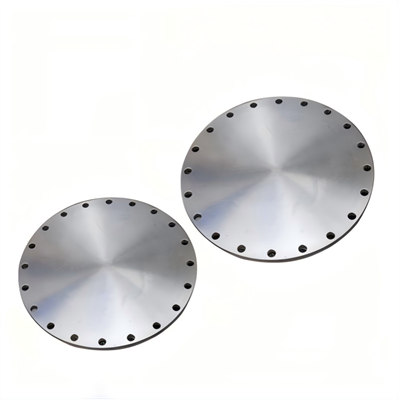
Next, BS flanges are critical for connecting large, heavy processing equipment that needs to be serviced regularly. Gas processing plants have a rotating list of equipment that requires maintenance: compressors, separators, heat exchangers, and fractionation columns, to name a few. These units can weigh dozens of tons, and you can’t weld them to the piping because you’d never be able to take them apart for repairs. BS flanges make that connection easy. Their standardized dimensions mean that a flange for a 12-inch separation drum will match exactly with a flange for a 12-inch pipe line, no custom machining required. When a technician needs to pull a separator tray to clean out accumulated sediment, they just loosen the bolts on the two BS flanges, lift the separator, and complete the work in hours instead of days. I supply a lot of BS blind flanges for this too—when a processing unit is temporarily offline, we supply blind flanges to cap off piping sections, preventing dirt, water, or debris from getting in that could damage equipment when the unit restarts. Blind flanges are another part of the BS specification that’s precision-made to resist warping, so even after months of being capped, they can be removed quickly without damage.
Another key use is in the vent and relief systems that are non-negotiable for gas plant safety. Every gas processing facility has pressure relief valves, flare stacks, and vent lines designed to release excess pressure if a unit overpressurizes. These lines run from the core processing equipment to the flare, often carrying high-temperature gas. BS flanges here have two big advantages: their pressure ratings are standardized for extreme temperatures, so you don’t have to guess if a flange will hold at 500 degrees Fahrenheit, and their alignment ensures that the vent line doesn’t sag over time. A sagging vent line can cause stress on the joint, leading to leaks when pressure spikes. A customer in the US Gulf Coast told me that using BS flanges for their flare lines eliminated the sag-related leaks they’d been dealing with for years. That’s a big deal—if a vent line leaks under pressure, it could send unprocessed gas straight into the atmosphere, leading to environmental fines or even a flare that doesn’t ignite properly during an emergency.
Let’s not forget about material handling and storage applications within gas processing too. Before natural gas is processed, it’s often stored in large above-ground tanks or pipelines that run from the wellsite to the plant. Those storage lines use BS flanges because they’re compatible with both carbon steel and the corrosion-resistant coatings used for external protection. The BS specification also covers flanges for cryogenic applications, which are critical for liquefied natural gas (LNG) processing. LNG is stored at -260 degrees Fahrenheit, and generic flanges can become brittle at that temperature, cracking when torqued. BS flanges made from low-temperature carbon steel are tested to withstand cryogenic temperatures without brittlement, making them ideal for LNG transfer lines and storage tank connections. I’ve supplied BS flanges to LNG processing plants along the Gulf Coast, and their maintenance teams tell me that these flanges last three times longer than generic flanges in cryogenic service.
What about the regulatory side? Gas processing is one of the most heavily regulated industries in the world, with standards from OSHA in the US, the HSE in the UK, and global ISO standards. When a plant is audited, having BS flanges is a huge plus. These flanges are third-party tested, so you can prove to inspectors that your piping connections meet recognized industry standards. A lot of plant managers I work with say that audit time is less stressful when they know their flanges have a certified BS stamp, because inspectors don’t have to question the quality of the component. Generic flanges don’t have that third-party certification, so you might have to bring in a metallurgist to test every batch, which adds time and cost to an already tight schedule.
Over the years, I’ve seen a lot of trends in the gas processing industry, and one that sticks out is the push for more modular construction. Many plants are built in modules off-site, then transported to the location and assembled. Modular construction relies on standardized parts to make assembly fast and reliable, and BS flanges are perfect for that. Every module has pre-piped sections with BS flanges, so when you connect two modules on site, the flanges line up perfectly, no custom drilling needed. That cuts down on construction time and reduces the chance of installation errors. Before I started supplying BS flanges, many of my customers had to custom-make flanges for each module, which added weeks to their project timeline. Now, they can order BS flanges off the shelf and install them in half the time.
I also want to talk about the long-term cost savings, because that’s what most customers care about. A lot of plant operators look at the upfront cost: a BS flange might cost 10-15% more than a generic flange. But when you factor in reduced leaks, less downtime, fewer repair costs, and compliance with regulations, that premium pays for itself in months. One of my regular customers, a midstream operator in the Rockies, told me that in the first year they switched all their critical piping to BS flanges, they saved $120,000 in lost production and repair costs. That’s a no-brainer, right? Especially when you consider that a single day of unplanned downtime for a large gas processing plant can cost $200,000 or more.
Of course, it’s not just about the flanges themselves—it’s about matching them to the right application. For low-pressure collection lines, we supply standard BS 10 flanges in carbon steel. For high-pressure compression lines, we offer BS 15 flanges in alloy steel, tested to 15,000 psi. For sour gas service, we supply BS flanges lined with corrosion-resistant materials that protect against hydrogen sulfide and other corrosive compounds. For cryogenic LNG lines, we have BS flanges made from low-temperature steel that meet all the necessary industry standards. I work closely with each customer to assess their specific needs, whether they’re building a new plant, upgrading an existing one, or maintaining equipment, so they get the right BS flange for the job, not just a one-size-fits-all part.
I’ve been in this industry long enough to know that some operators think “a flange is just a flange” until they have a leak that causes downtime or a regulatory penalty. That’s why I made it my mission as a BS flanges supplier to not just sell parts, but to educate customers on how these components make their operations safer, more reliable, and more profitable. I’ve sat through countless plant audits, helped customers troubleshoot flange-related issues, and walked technicians through the proper way to torque BS flanges to get the best seal. It’s not just about the product—it’s about the support that comes with it.
If you’re working in the gas processing industry, whether you’re a plant manager, maintenance supervisor, or project engineer, you know how critical every component is. BS flanges aren’t a small expense—they’re an investment in the safety and efficiency of your entire operation. If you’re looking to upgrade your current flange setup, or need reliable BS flanges for a new project, I’m here to help. We work with gas processors of all sizes, from small midstream plants to large-scale LNG facilities, and we can supply the right flanges to meet your specific needs.
Forged Fittings References
- British Standards Institution. BS 10: Steel Pipe Flanges and their Joints. British Standards Institution, 2010.
- British Standards Institution. BS 15: Specification for Steel Pipe Flanges for High-Pressure Service. British Standards Institution, 2012.
- Gas Processors Association. Fundamentals of Natural Gas Processing, 3rd ed. GPA, 2017.
- Occupational Safety and Health Administration. Process Safety Management Standard: 29 CFR 1910.119. U.S. Department of Labor, 2020.
- International Organization for Standardization. ISO 10423: Petroleum and Natural Gas Industries – Drilling Equipment. ISO, 2018.
Hebei Haihao Group Huadian High Pressure Pipe Fittings Co., Ltd.
As one of the most professional bs flanges manufacturers and suppliers in China, we are able to meet the needs of the majority of our customers. Please rest assured to wholesale high quality bs flanges made in China here from our factory. For price consultation, contact us.
Address: Donglin Industrial Zone, Mengcun County, Cangzhou City, Hebei Province, China
E-mail: haihaohuadian@outlook.com
WebSite: https://www.hhfittings.com/
