Hey there, fellow pharma folks, especially the ones who’ve ever stared at a pile of wet drug intermediates or finished dosage forms, wondering which drying setup won’t mess up your product, your timeline, or your budget. As a drying equipment supplier who’s been in this game for over a decade, I’ve heard every horror story—stuff like batch drying too slow and ruining a heat-sensitive API, or using the wrong dryer that left too much residual moisture, making your final product fail stability tests. If you’re scrolling through this because you’re stuck on “how to pick the right drying gear for pharma,” let’s break this down like we’re grabbing coffee (minus the awkward small talk, promise). Drying Equipment
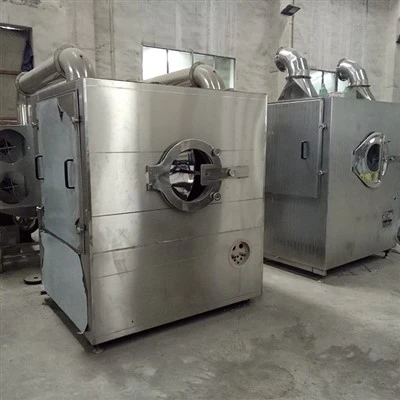
First off, let’s get one thing straight: pharma drying isn’t like drying your socks. You can’t just blast ’em with a hairdryer and call it good. We’re dealing with active pharmaceutical ingredients (APIs), excipients, tablets, capsules, even biotech stuff like vaccines or cell cultures—all of which have super specific rules about temperature, moisture content, air quality, and contamination. So the first step isn’t even looking at machines—it’s auditing your own product and process.
Let’s start with the basics: what are you actually drying, and what can it handle? I’ve had a customer come to me last year saying, “We need a dryer for our paracetamol granules—just get us the cheapest one.” Turns out paracetamol is stable at 105°C, but their next project was a peptide API that breaks down above 40°C. If I’d sold ’em the same cheap unit, that peptide would’ve been useless before it even hit the market. So let’s talk product properties:
- Heat sensitivity: If your stuff is a “low-temp” product (peptides, proteins, some antibiotics), you can’t use a conventional tray dryer that runs at 60-80°C. You need something that does vacuum drying—lower pressure means lower boiling point for water, so you can dry at 25-40°C without cooking the good stuff.
- Particle size and structure: If you’re drying fine powders (like inhaler ingredients), you can’t use a fluid bed dryer that blows air so hard it lifts particles and causes cross-contamination between batches. Those tiny powders can also get stuck in filter pockets, so you need a dryer with self-cleaning filters or a closed-loop system. On the flip side, if you’re drying large chunks of wet cake (like from crystallization), a freeze dryer might be overkill—you could go with a rotary vacuum dryer that tumbles the chunks, breaking them up gently while drying.
- Residual moisture requirements: Pharma has strict specs—most APIs need residual moisture between 0.5-2% to keep them stable, while some tablets need 3-5% to prevent cracking. If your process needs super precise moisture control (like for biologic drug products), a microwave vacuum dryer might be the way to go—it uses electromagnetic energy to heat the product evenly, so no hot spots, and you can tie it to moisture sensors to stop exactly when you hit your target.
Next up, process scale—because a lab-scale dryer works for 100g samples, but scaling it up to 1000L batches isn’t just “bigger machine.” I’ve seen too many customers assume a 10x scale-up is easy, but it’s not. For example, a lab-scale freeze dryer might work great for 500mL vials, but when you jump to 5000L industrial scale, you have to consider heat transfer uniformity across the entire batch. If one corner of the dryer is colder than another, you’ll end up with some vials over-dried and some under-dried, which is a big no-no in pharma. Also, if you’re doing continuous manufacturing (which more pharma shops are moving to these days), batch dryers won’t cut it. You need a continuous dryer—like a conveyor belt dryer that runs products through a controlled air stream 24/7, which is perfect for high-volume, consistent products like oral solid dosage forms.
Then there’s compliance—this is non-negotiable, guys. Pharma equipment isn’t sold off a shelf at a hardware store. It has to meet cGMP (current Good Manufacturing Practices) standards, and that means things like:
- Material of construction: All parts that touch your product have to be 316L stainless steel, no exceptions. No cheap steel that can rust or leach metals into your drug. I’ve had a customer try a cheaper dryer with 304 steel, and after a few runs, they found corrosion in the drum—their product had trace metal contamination, which set them back 3 months and cost them hundreds of thousands in fines.
- Cleanability: You need to be able to take the dryer apart easily for CIP (Clean-in-Place) or SIP (Sterilize-in-Place). If the machine has hard-to-reach crevices, you’ll get cross-contamination between batches. For example, fluid bed dryers have to have filters that are easy to remove and sanitize, and the product contact surfaces should have smooth finishes (Ra < 0.8 μm) so no powder gets stuck.
- Documentation: The dryer has to have built-in data logging capability—temperature, pressure, moisture levels, run times—all of which you need to keep for regulatory audits. If a machine doesn’t track that data, it’s basically useless for pharma. Skip any supplier that tries to sell you a dryer without that feature.
Budget is another big one, but here’s the thing: don’t just go for the cheapest. I’ve had customers who picked a $50k tray dryer instead of a $75k vacuum dryer, and within 6 months, they were replacing it because the tray dryer ruined their heat-sensitive API, costing them way more than the upfront difference. Also, factor in operating costs—some dryers use way more energy than others. For example, freeze dryers have high electricity costs, but if you’re drying a product that can’t be dried any other way, it’s worth it. If you can use a fluid bed dryer, which is more energy-efficient, that’ll save you money in the long run. Also, think about maintenance—does the supplier have a local service team? If your dryer breaks down and you have to wait 2 weeks for a technician to fly in, that’s downtime that costs you money. We offer 24/7 emergency service for all our pharma dryers, because I know how critical it is for their process to keep running.
Let me throw in some real examples to make this concrete. Last quarter, a biotech startup came to us needing a dryer for their monoclonal antibody formulation. It’s a protein, so heat-sensitive, needs 0.8% residual moisture, and they’re running 500L batches. We recommended a vacuum tray dryer with temperature sensors and CIP capability. It works at 35°C, so the protein doesn’t denature, the sensors let them stop exactly at 0.8% moisture, and the 316L steel is easy to clean. They were over the moon because it fit their budget and checked all the compliance boxes. Another customer is a generic drug manufacturer making paracetamol tablets—high-volume, heat-stable, needs 3% residual moisture. We recommended a continuous fluid bed dryer, which runs 24/7, uses less energy, and has automated CIP so they don’t have to shut down for long cleaning times. They’ve cut their production time by 20% since switching.
Wait, let’s also talk about common pitfalls to avoid. One mistake I see a lot is not testing the product in the equipment before buying. A good supplier will let you run a trial on your actual product in their demo lab. We have a full demo lab with all our dryer types, so customers can send us their wet material, we run a test, show them the moisture levels, temperature, and how the product holds up. No guesswork—you know exactly what you’re getting before you spend a dime. Another pitfall is ignoring future scalability. If you’re planning to double your production in 2 years, don’t buy a dryer that’s only good for your current batch size. Go for one that can be scaled up, or has modular components so you can add capacity later.
So to wrap this up, here’s your step-by-step checklist:
- Know your product’s specs: heat sensitivity, particle size, required residual moisture.
- Match the dryer type to your product and scale (batch vs continuous, lab vs industrial).
- Confirm it meets cGMP standards: 316L steel, cleanability, data logging.
- Factor in total cost: upfront price, operating costs, maintenance support.
- Run a trial before committing.

If you’re still confused, or have a specific product or process in mind, don’t overcomplicate it. Shoot us a message—we’ve worked with every type of pharma dryer application, from small startups to big pharma giants. We’ll walk you through the trial, help you pick the right gear, and make sure it’s all set for your regulatory needs. No salesy jargon, just straight talk about what’ll work for you.
Pneumatic Vacuum Feeder References:
- International Society for Pharmaceutical Engineering (ISPE). (2020). Good Practice Guide: Drying Technologies for Pharmaceutical Manufacturing.
- U.S. Food and Drug Administration (FDA). (2022). Current Good Manufacturing Practice (cGMP) for Finished Pharmaceuticals, 21 CFR Part 211.
- Perry, J. H., & Green, D. W. (Eds.). (2019). Perry’s Chemical Engineers’ Handbook (9th ed.). McGraw-Hill.
- European Medicines Agency (EMA). (2021). Guideline on Drying Processes for Medicinal Products for Human Use.
Nanjing Huozao Machinery Technology Co., Ltd.
Nanjing Huozao Machinery Technology Co., Ltd. is one of the most professional drying equipment manufacturers and suppliers in China, also supports customized service. With abundant experience, we warmly welcome you to buy durable drying equipment for sale here from our factory. For price consultation, contact us.
Address: No.2, Kuailu Road, Longtan Street, Qixia District, Nanjing
E-mail: hz@huozaodryer.com
WebSite: https://www.huozaodryer.com/
