As a HNBR hose supplier who’s spent the last decade troubleshooting for industries from aerospace fluid systems to industrial chemical processing, I get asked one question at least twice a week: “Do you make a conductive version of HNBR hose?” It’s not a trivial query, either—for anyone working with highly volatile fuels, volatile organic compound (VOC) transfer, or high-static environments, a standard non-conductive HNBR hose isn’t just an inconvenience. It’s a safety hazard that can lead to electrostatic discharge (ESD), which in the worst cases ignites flammable materials or damages sensitive electronic equipment. Let’s break this down honestly, no industry jargon fluff, just what I’ve learned from working with HNBR day in and day out, and what I know about conductive HNBR hoses right now. HNBR Hose
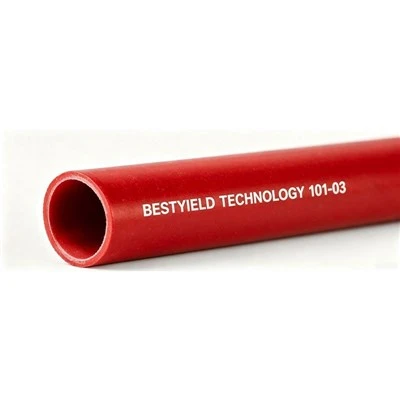
First, a quick refresher for anyone new to HNBR, because not every shop or engineer I talk to has the same background. HNBR stands for Hydrogenated Nitrile Butadiene Rubber, a workhorse elastomer that’s prized for its unbeatable balance of properties: it resists oil, chemicals, ozone, and extreme temperatures (from -40°C up to 150°C, sometimes higher with specialized formulations) far better than standard NBR nitrile. That’s why it’s the go-to for fuel lines, hydraulic hoses, and chemical transfer lines in automotive, aerospace, and heavy machinery. But here’s the catch: pure HNBR is a naturally insulating elastomer, with a surface resistivity that typically hovers between 10^12 and 10^15 ohms per square. For context, most plastics are around 10^10 to 10^16, so pure HNBR is right in the range where static electricity builds up. If your hose is transferring a fluid that rubs against the inner wall—like gasoline, jet fuel, or even fine industrial powders—the friction generates a static charge. If that charge can’t dissipate through the hose to the ground, it builds up until it sparks, and that’s when accidents happen. So yes, the need for conductive HNBR hose is real, but it’s not as straightforward as just tweaking a recipe and calling it a day.
Let’s get into what “conductive” even means in this context, because there’s a lot of misinformation floating around the hose market. The terms ESD-resistant, static-dissipative, and conductive aren’t interchangeable, and that’s a mistake a lot of suppliers make to upsell products that don’t meet the requirement. For hose applications handling flammable or explosive materials, the industry standard—especially from bodies like the National Fire Protection Association (NFPA) and ISO—is that a static-dissipative hose must have a surface resistivity between 10^6 and 10^9 ohms per square, and a volumetric resistivity between 10^5 and 10^8 ohm-centimeters. Conductive, in the terms used for these safety-critical applications, is sometimes used interchangeably with static-dissipative, but strictly speaking, pure conductive materials have resistivity below 10^4 ohm-centimeters, which is too conductive for most hose uses—it can cause current leakage, and some industries actually require that the hose is conductive enough to dissipate static but not so conductive that it carries electrical current away from the intended path. That’s a key detail I always make sure my customers understand: we don’t sell “fully conductive” HNBR hoses for this reason, we sell static-dissipative HNBR hoses that meet the exact resistivity requirements for ESD safety.
Now, how do you make HNBR conductive, and what are the trade-offs? Adding conductivity to rubber elastomers is all about adding conductive fillers. The most common fillers are carbon black (specifically high-structural carbon black, called acetylene black or furnace black), carbon nanotubes, graphene, or even metal powders like copper or silver. For HNBR specifically, there are two main ways to incorporate these fillers, and both have their pros and cons that I’ve tested over the years.
The first method is blending conductive fillers directly into the HNBR polymer matrix during compounding. This is the simplest approach, and it works well for many rubber products. But here’s the problem with HNBR: HNBR’s molecular structure is saturated (the double bonds from standard NBR are hydrogenated, which is what gives HNBR its excellent chemical and heat resistance), so it’s stiffer than NBR, and it has lower compatibility with many fillers than less saturated elastomers. When you add a lot of conductive filler to HNBR to drop its resistivity into the static-dissipative range, you have to add enough to form a continuous conductive network throughout the rubber. Too little filler, and you get spotty conductivity that fades over time as the hose flexes. Too much filler, and you ruin HNBR’s signature properties: the hose becomes too stiff, loses its flexibility for bending in tight spaces, resists crushing, and even loses its chemical resistance because the filler can create tiny gaps in the rubber matrix where chemicals can seep in. I’ve seen hoses that were compounded this way crack within a year of use because they were overly stiff from too much carbon black, and they couldn’t stand up to the heat of engine bays or the oils they were transferring.
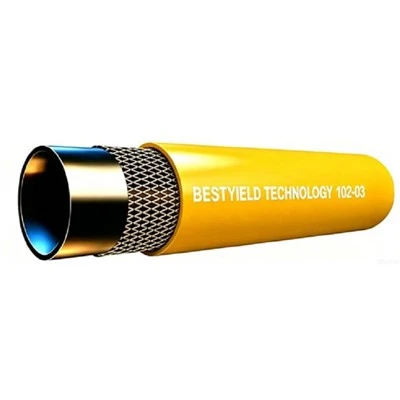
The second method, and the one I’ve settled on as the most reliable for conductive HNBR hoses, is building a conductive inner liner or a static dissipative strip integrated into the hose wall. This is called a “static dissipative helix” or a “conductive insert,” and it’s been used in rubber hoses for decades, but it works exceptionally well with HNBR because it doesn’t require altering the HNBR polymer itself. Here’s how it works: standard multi-layer HNBR hose has an inner tube, a reinforcement layer (usually steel or synthetic braid), and an outer cover. For our conductive version, we embed a fine, continuous braid of carbon steel or copper alloy wire into the innermost tube, right against the HNBR inner wall. That wire braid acts as a continuous path for static charge to flow, and we connect that braid to the outer cover with tiny conductive pins, so any static that builds up on the inner liner dissipates all the way through the hose to a ground point. The beauty of this method is that it leaves the HNBR inner tube pure, so we retain all of HNBR’s original properties: oil resistance, heat resistance, flexibility, and durability. The only trade-off is that you have to make sure the braid is properly connected—if there’s a break in the wire, the conductivity is lost, so we test every single conductive HNBR hose we make with a resistance meter to confirm it meets the 10^6 to 10^9 ohms per square requirement before it leaves our facility.
I should also be transparent about the limitations of this design, because no conductive HNBR hose is perfect. The wire braid can cause a small amount of pressure drop in the hose, because the inner surface is not perfectly smooth like pure HNBR. For most applications—like fuel transfer, hydraulic lines for construction equipment, or industrial chemical hoses—this is negligible, but if you need a hose for ultra-high-flow applications where even a 5% pressure change matters, you have to work with a compounded conductive HNBR liner, and that comes with the performance trade-offs I mentioned earlier. Another limitation is temperature: the wire braid can soften at extremely high temperatures (above 180°C), so for applications that operate consistently above that, we recommend a specialized carbon-fiber braid instead of metal, which is more heat-resistant, though it’s more expensive.
Now, who actually needs a conductive HNBR hose, and why would they choose it over other conductive hose materials? That’s a question I get all the time, because some industries just don’t need static-dissipative hoses. For example, if you’re using a hose to transfer water or non-flammable fluids at low pressure, a standard HNBR hose works fine. But if you work in aerospace, that’s a different story. Aircraft fuel lines run near hundreds of thousands of volts of static from air flow, and any spark could be catastrophic. We supply conductive HNBR hoses to several regional airlines for their refueling lines, and those hoses have to meet FAA standards for ESD resistance, which is why the integrated braid design is non-negotiable there. Another big sector is industrial chemical processing: transferring solvents, alcohols, and powdered chemicals can generate massive static charge, and OSHA and NFPA require static-dissipative hoses for most of these transfer operations. We also work with automotive manufacturers for their electric vehicle (EV) battery cooling lines? Wait, no, actually, EV battery cooling uses mostly EPDM hoses, but for the fuel lines in hybrid vehicles, conductive HNBR is the only option that meets both fuel resistance and ESD requirements.
I’ve had my share of bad experiences with mis-sold “conductive” hoses, which is why I’m so careful to educate my customers. A few years back, a small chemical plant contacted me with a problem: they’d bought a cheap conductive HNBR hose from a non-specialist supplier, and within six months, the hose had cracked and stopped dissipating static. When we tested it, the supplier had added a tiny amount of carbon black to the HNBR liner, just enough to get resistivity in the 10^11 range—barely even static-dissipative, not meeting the NFPA standard. By the time the plant realized it, they’d had a few close calls with static sparks, and they had to replace their entire hose stock at their own cost. That’s why I always tell customers to ask for third-party test data on resistivity, not just take a supplier’s word for it. A real conductive HNBR hose should come with a certificate that states its surface and volumetric resistance, not just a vague label.
So, to answer the original question: yes, a legitimate, safety-compliant conductive version of HNBR hose does exist. But it’s not a simple tweak to a standard HNBR compound that you can get for the same price as a regular hose, and it has trade-offs depending on your application. If you need a static-dissipative hose that retains HNBR’s excellent oil and chemical resistance for flammable fluid transfer, the integrated conductive braid design is the most reliable option on the market right now. If you need it for a high-flow application where a small pressure drop is unacceptable, there are compounded conductive HNBR hoses available, but you have to accept that they’ll be stiffer, have shorter service life, and cost more than standard HNBR.
Now, if you’re reading this and you’re wondering if a conductive HNBR hose is right for your operation, don’t guess. A mistake here isn’t just a cost issue—it’s a safety issue. I’ve spent the last 10 years refining our conductive hose designs, working with independent testing labs to make sure they meet all industry standards, and I’d be happy to walk you through the specifics, answer questions about your application, and provide sample hoses for testing. No sales pitch, no fine print, just real advice from a supplier who’s worked with HNBR for decades, and who cares about keeping my customers safe as much as delivering a high-quality product.
If you’d like to discuss your hose needs, including conductive HNBR options tailored to your application, feel free to reach out to our team for a no-obligation consultation.
PTFE Tube References
- National Fire Protection Association (NFPA) 77, Recommended Practice on Static Electricity
- ISO 8031:2018, Rubber and plastics hoses and hose assemblies – Determination of electrical resistance
- "Hydrogenated Nitrile Butadiene Rubber (HNBR): Properties and Applications," Rubber Chemistry and Technology, Vol. 92, No. 3, 2019
- Static Control for Industrial Hose and Tubing, Industrial Distribution Magazine, 2022
BESTYIELD Technology (Huizhou) Co., Ltd.
BESTYIELD Technology (Huizhou) Co., Ltd. is one of the most professional hnbr hose manufacturers and suppliers in China, featured by quality products and good price. Please rest assured to buy durable hnbr hose made in China here and get quotation from our factory. Customized orders are welcome.
Address: Yinshan Industrial Zone, Liangjing Town, Huiyang District, Huizhou City, Guangdong Province
E-mail: rick@bestyield.net
WebSite: https://www.bestyield.org/
