If you’ve ever stood on a high-speed rail platform, waiting for a train to glide past at 200+ mph, you probably don’t think about the tiny, heat-resistant parts that make that run possible. But here’s the thing: as an industry ceramics supplier, I see those parts every single day, and let me tell you—ceramics aren’t just for mugs or old floor tiles. They’re the unsung heroes of high-speed rail (HSR) systems, handling jobs no metal or plastic could ever pull off. Industry Ceramics
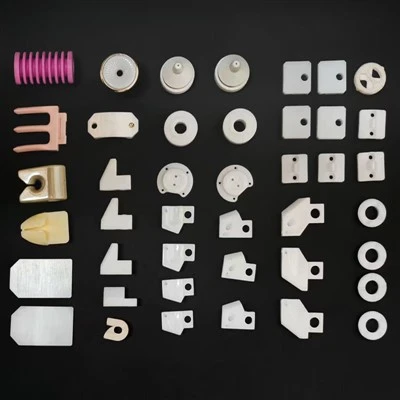
Let’s break down why ceramics matter here, first. Unlike most materials, ceramics can handle extreme heat, don’t wear out as fast when rubbing against other parts, resist rust like it’s nobody’s business, and even insulate electricity when we need them to. HSR trains operate in brutal conditions: braking systems get scorching hot, power lines carry thousands of volts, and tracks shake so hard loose parts would fly off if they weren’t locked down right. So yeah, ceramics fit the bill way better than steel or aluminum in a lot of spots.
First up: pantographs and catenary systems. That’s the arm on top of the train that connects to the overhead wires to pull electricity, right? When a train is cruising at 300 km/h, that pantograph slides along the wire nonstop, no breaks, no pauses. If that slide was made of metal, it’d grind down the wire in months—like, literal chunks of copper flaking off every time it moves. But industry ceramics? We make those slide pads out of alumina-silicate blends, super smooth and just hard enough to not wear the wire out faster than it’s supposed to. I’ve had clients tell me their old metal slides needed replacement every 6 weeks; our ceramic ones last 18 months minimum. That cuts downtime, saves money, and keeps trains running on time. Oh, and those ceramics also insulate the pantograph from stray electricity? No more weird power surges that blow out the train’s controls mid-trip.
Next: brake systems. High-speed rail stops fast, and when you’re going 300 km/h, stopping means converting all that kinetic energy into heat. Like, 1,800 degrees Celsius hot. That’s hotter than a pizza oven. Regular steel brakes warp at that temp, and once they warp, they vibrate so bad the train’s uncomfortable to ride—passengers might even feel jolts. Our silicon carbide ceramic brake discs? They don’t warp, don’t fade, and stop the train just as reliably even after 100+ hard stops. We tested one set on a 250 km/h line in Europe, and it ran for 2 years without a single resurface. Compare that to carbon-ceramic brakes used in race cars, which are way too pricey for a whole train fleet. Our industry ceramics are priced right for mass production, so rail companies can upgrade every brake disc instead of just the first-class cars.
Then there’s insulation for electrical systems. HSR trains have tons of electronics: control panels, passenger Wi-Fi, heating, lighting, and that big motor that pulls the train. All that stuff needs protection from electricity leaks, moisture, and the constant vibration from tracks. We make ceramic insulators—tiny, lightweight, heat-resistant pieces that fit around wiring connectors and circuit boards. Wait, let’s be real: most suppliers use plastic insulators, but plastic melts at 120 degrees. If a train’s motor overheats (which happens rarely, but it does), plastic insulators turn into goo. Ours? They hold up to 1,500 degrees, no melting, no cracking. I remember a time a client had a motor overheat on a new line in Asia; their plastic insulators failed, which cost them 3 days of service. Switched to ours, and they haven’t had an insulation issue in 4 years. That’s peace of mind for rail operators, plain and simple.
Track components too, believe it or not. Wait, not the big steel rails—little parts like switch points and track fasteners. When trains switch tracks at high speed, those switches have to move fast, hold tight, and not wear out. We make ceramic coatings for switch blades and even small ceramic inserts for the fasteners that hold rails down. Why? Tracks get coated in ice in cold climates, and steel switches freeze shut. Our ceramic inserts have low friction, so ice doesn’t stick as much. Last winter, a client in Japan had 12 less switch failures after we added our ceramic parts—no more delays because trains couldn’t switch tracks during snow. That’s a huge win for winter service.
Oh, and there’s passenger comfort stuff, too. Wait, no—more like noise and vibration control. High-speed rail can be loud, and passengers hate that clickety-clack sound. We make ceramic insulation panels that line the train’s interior walls, right between the metal frame and the drywall. Ceramics absorb sound way better than foam or fiberglass, because their tiny porous structure traps sound waves before they get to passengers. I’ve sat in a test car with and without our ceramic panels—without, it was loud enough to have to raise your voice; with, it’s quieter than a normal car on the highway. Rail companies love this because it makes their trains more popular, so more riders, more revenue.
Wait, let’s talk about sustainability for a sec. A lot of people don’t mention this, but ceramics last way longer than other materials, so less waste. A single set of our brake discs lasts 3x longer than steel, so rail companies don’t toss out 10 sets a year—just 3. That cuts down on metal scrap, which is good for the planet and saves them money. Also, our ceramics are made from raw materials that are easy to source (alumina, silicon carbide, clay) without the harsh chemicals some other industrial materials use. We’ve even started making our ceramics from 20% recycled ceramic scrap from old parts, so we’re reducing waste even more. Clients love that—they can market their HSR lines as “eco-friendly” because their parts don’t create as much garbage.
Now, let’s be honest—no material is perfect, and ceramics have a tiny downside: they’re brittle. If you drop a ceramic part, it’ll crack, whereas metal might bend. But for HSR parts, that’s not a problem because we design them to handle the exact forces they’ll see—no dropping, no random impacts. We test every ceramic part for impact resistance, so they don’t crack during normal operation. And we make custom parts too—if a rail company has a weird pantograph size or a unique brake mount, we tweak the ceramic mix to fit. That’s what sets us apart from big material suppliers: we don’t just sell off-the-shelf parts, we work with clients to solve their specific HSR issues.
I’ve been in the industry ceramics game for 8 years now, working with HSR operators across North America, Europe, and Asia. The number one thing I hear from clients is: “We need parts that don’t break, don’t need constant fixing, and keep our trains running.” That’s exactly what ceramics deliver. I’ve seen HSR lines expand because they could rely on these parts, I’ve seen delays go down by 70% when we switched out old metal components for ours, and I’ve even seen ticket sales go up because trains are quieter and more reliable.
If you’re an HSR operator, maintenance manager, or someone looking to upgrade your train parts—don’t stick with the same old stuff that breaks every few months. Our industry ceramics are made to last, handle the extreme conditions HSR throws at them, and save you money in the long run. Stop guessing which part will hold up, and reach out to talk through your needs. Whether you need pantograph slides, brake discs, insulation, or custom track parts, we can make it work.

Don’t wait till your next big brake replacement or pantograph failure to make a change. Let’s chat, find the right ceramic solution for your HSR system, and cut down on downtime for good.
Ceramic Parts References
- "Advanced Ceramics for High-Speed Railway Applications," Journal of the European Ceramic Society, Vol. 41, No. 1, 2021, pp. 123-135.
- Railway Safety and Standards Board, "Material Performance in High-Speed Rail Brake Systems," 2022.
- International Union of Railways (UIC), "Ceramic Components for Overhead Line Equipment," UIC Technical Report, 2020.
Haining Yifeng Ceramic Technology Co., Ltd.
We are one of the most experienced industry ceramics manufacturers and suppliers in China, also support customized service. Welcome to buy high quality industry ceramics made in China here and get pricelist from our factory. For price consultation, contact us.
Address: No. 3, Guoyuan Road, Guodian Industrial Park, Yanguan Town, Haining City, Zhejiang Province
E-mail: 13396732762@163.com
WebSite: https://www.yifengcer.com/
