As a supplier of 3D PVC patches, I often get asked about the many qualities of these unique products, and one question that stands out is, "Are 3D PVC patches resistant to sunlight?" This is an important query, especially for clients who plan to use these patches in outdoor applications. In this blog, I’ll delve into the science behind 3D PVC patches and their interaction with sunlight, discussing factors that affect their sunlight resistance, how to enhance it, and real – world examples of their performance under the sun. 3D PVC Patch
Understanding 3D PVC Patches
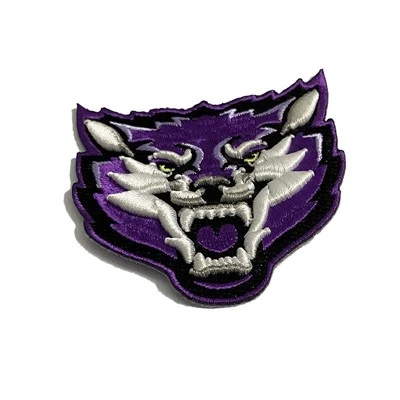
3D PVC patches are made from polyvinyl chloride (PVC), a synthetic plastic polymer. The manufacturing process involves creating a three – dimensional design by injecting PVC into a mold. Once the PVC cools and solidifies, it takes on the desired shape, which can be highly detailed and visually appealing. These patches are popular for a variety of uses, such as on uniforms, bags, hats, and promotional items.
The Science of Sunlight and PVC
Sunlight is composed of different types of electromagnetic radiation, including ultraviolet (UV) rays, visible light, and infrared radiation. Among these, UV rays are the most harmful to PVC materials. UV rays have enough energy to break the chemical bonds in PVC molecules. When these bonds break, the PVC can undergo a series of chemical changes.
Oxidation is one of the primary reactions that occur when PVC is exposed to sunlight. Oxidation can lead to a phenomenon called "chalking," where the surface of the PVC becomes powdery. Over time, it can also cause the PVC to become brittle, lose its color, and eventually crack. This is a natural consequence of the chemical instability induced in the PVC by UV radiation.
Factors Affecting Sunlight Resistance of 3D PVC Patches
Additives Used
During the manufacturing process, additives can be incorporated into the PVC material to enhance its sunlight resistance. UV stabilizers are one such crucial additive. These stabilizers work by absorbing or reflecting UV radiation, preventing it from reaching and damaging the PVC molecules. Hindered amine light stabilizers (HALS) are commonly used in PVC. They can capture free radicals produced during the UV – induced degradation process, thus slowing down the oxidation and degradation of the PVC.
Pigments also play a role. Some pigments are more resistant to UV fading than others. For example, inorganic pigments generally have better UV resistance compared to organic pigments. When formulating the PVC for 3D patches, choosing high – quality, UV – resistant pigments can significantly improve the patch’s ability to retain its color under sunlight.
Thickness of the Patch
The thickness of a 3D PVC patch can influence its sunlight resistance. A thicker patch has more material, which means that even if the outer layer undergoes some degradation due to sunlight exposure, there is a larger volume of unaffected PVC beneath. In contrast, a thinner patch may be more vulnerable to complete degradation as there is less material to withstand the UV – induced damage.
Design Complexity
The design of a 3D PVC patch can also impact its sunlight resistance. Patches with complex, detailed designs may have areas that are more exposed to sunlight than others. For instance, raised parts of the design may receive more direct sunlight, leading to uneven degradation. Additionally, areas where the PVC is thinner due to the design intricacies may be more prone to damage.
Enhancing Sunlight Resistance
Quality Manufacturing
As a 3D PVC patch supplier, I understand the importance of using high – quality materials and advanced manufacturing techniques. By carefully selecting PVC resins with good inherent stability and using the right combination of additives, we can produce patches with better sunlight resistance. Our manufacturing process also includes strict quality control measures to ensure that each patch meets our standards for durability.
Coating Application
Applying a protective coating on the surface of the 3D PVC patches is another effective way to enhance sunlight resistance. A clear, UV – resistant coating can act as a barrier, preventing UV rays from directly hitting the PVC. This coating can also add a glossy finish to the patches, giving them a more professional and attractive appearance.
Proper Storage and Usage Recommendations
We provide our customers with guidelines on how to store and use the 3D PVC patches. Storing the patches in a cool, dark place when not in use can prolong their lifespan. For outdoor applications, we recommend choosing locations where the patches are not constantly exposed to direct sunlight for extended periods. For example, if the patches are used on outdoor signage, placing them in a partially shaded area can reduce UV exposure.
Real – World Performance
In real – world scenarios, 3D PVC patches have shown varying levels of sunlight resistance. For instance, in the sports industry, many teams use 3D PVC patches on their uniforms. These uniforms are often worn during outdoor games, where the patches are exposed to sunlight for several hours. In some cases, with proper additive formulation and coating, the patches have maintained their color and shape for an entire sports season.
On the other hand, in areas with intense sunlight, such as desert regions or tropical countries with high UV indices, the performance of the patches may be more challenging. However, by following the recommended enhancement methods, we have still been able to supply patches that perform reasonably well.
Conclusion
In conclusion, while 3D PVC patches are not inherently completely resistant to sunlight, their resistance can be significantly enhanced through various means. By using appropriate additives, considering factors like patch thickness and design complexity, and utilizing techniques such as coating application, we can produce 3D PVC patches that are suitable for a wide range of outdoor applications.
3D Embroidery Patch If you’re looking for high – quality 3D PVC patches with good sunlight resistance for your uniforms, promotional items, or other needs, I’d love to discuss your requirements. Our team of experts can work with you to ensure that the patches meet your specific needs and expectations. Whether you need custom designs or bulk orders, we’re here to provide you with the best solution. Reach out to us to start a conversation about your 3D PVC patch procurement.
References
- "Handbook of PVC Formulating" by Edward J. Wickson.
- ASTM International standards related to PVC material durability and UV resistance.
- Research articles on polymer degradation by UV radiation from academic journals such as Polymer Degradation and Stability.
Yiwu Lanying Garment Accessories Co., Ltd.
As one of the most professional 3d pvc patch manufacturers and suppliers in China, we’re featured by quality products and good service. Please rest assured to wholesale premium 3d pvc patch at competitive price from our factory. Customized orders are welcome.
Address: F1,NO.448, Majiaotang Village, Houzhai Street, Yiwu City, Zhejiang Province, China 322000
E-mail: zhangchunyingzi@126.com
WebSite: https://www.embroideredpatchfactory.com/
