Hey there, it’s Mia from the POF shrink film team, and I get asked this question at least 10 times a day: “What’s the shrinkage temperature range for POF film?” If you’re a packaging manager, a manufacturer fresh to shrink wrapping, or someone just trying to figure out why their shrink wraps keep looking all wonky, you’ve probably Googled this too. The truth is, it’s not a one-size-fits-all number, and a lot of what you’ll find online is either too vague or way too technical for regular folks. Let me break this down like I would to a client on a coffee run—no jargon, just real stuff from the supplier side that actually matters. POF Shrink Film
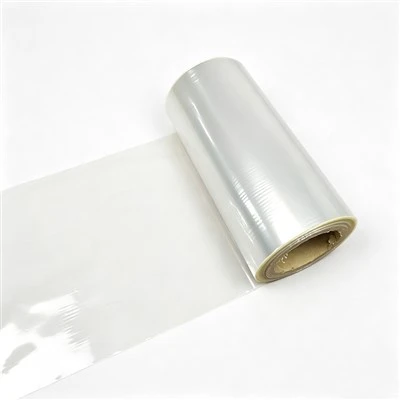
First, let’s start with the basics for anyone who’s new here. POF stands for Oriented Polypropylene Film, right? It’s way different from PVC shrink film (the one that used to make those cheap food packages) or polyethylene (PE) film you see on pallets. POF’s big perk is it’s super clear, durable, and doesn’t leave that weird cloudy residue or shrink marks. But the whole point of shrink film is that it shrinks when heated—heat makes the molecules that were stretched during manufacturing snap back to their original, smaller shape. That’s where temperature comes in; miss the sweet spot, and your wrap either doesn’t shrink enough, melts, or leaves those ugly wrinkles you see on bad packaging.
So what’s the actual shrinkage temp range? Let’s keep it simple: most standard POF shrink film we supply hits its shrink sweet spot between 120°F (48°C) and 160°F (71°C). Wait, hold on—before you scribble that down and walk away, let me clarify because this is where so many people mess up. That number isn’t a single line; it’s a range, and it’s split into two parts: the minimum temp where shrinkage starts happening, and the optimal temp where you get full, even shrinkage without damage.
The minimum shrinkage temperature for POF is around 120°F. That’s the point where the molecular chains start to relax, so the film will begin to pull tight around your product. But here’s the thing—if you stop heating at 120°F, you’re only going to get like 50% shrinkage max. Most POF is made to shrink between 50-60% across both its length and width, right? To get that full shrink, you need to crank the heat up to the optimal zone, which is 140°F to 160°F. That’s where the film will lay flat, stretch around corners, and eliminate all that loose, baggy look. Go above 160°F, and you’re in the danger zone—POF will start to melt, bubble, or tear. We’ve had clients tell us they ran a heat gun too close to a product and ended up with holes in the wrap that made the whole shipment look unprofessional.
But wait a second—this is just the range for our standard, off-the-shelf POF, right? Not all POF is the same. We make custom blends for specific jobs, so the temp range shifts a little. For example, if you’re wrapping something super heavy, like a case of glass bottles, we might add a little plasticizer to the film to make it more flexible. That blend will have a slightly lower minimum temp, like 115°F, because the additives help the molecules relax faster. On the flip side, if you’re wrapping something that’s going to be stored outside in extreme heat—like a patio furniture set—we make a heat-resistant POF variant. Its range goes a little higher, up to 165°F, so it doesn’t shrink too much when it’s sitting in a delivery truck on a 90°F day. We’ve seen cheap POF from no-name suppliers shrink so much in the sun that it crushed the product inside, and that’s not a mistake you want to make with a client order.
Now, why does temp matter so much? Let’s talk about common problems we see from people who get the temp wrong. First, under-shrinking: if your heat is only at 110°F, the film stays loose, so it can shift during shipping, get scratched, or even fall off entirely. We had a small toy manufacturer last year who was using a heat tunnel set to 115°F—their shrink wraps looked okay on the production line, but by the time they got to the retailer, half the wraps were loose and wrinkled because the temp was too low to get full shrink. They switched to our standard POF and bumped the heat to 150°F, and their defect rate dropped from 12% to 1% overnight.
Then there’s over-shrinking, which is less common but still a headache. If you heat POF above 160°F, it melts, so you get those sticky spots on the product, or even holes. We had a food packaging client who used a high-speed heat gun to wrap individual candy bars—they cranked it too hot, and the film melted into the candy, which made customers complain. We switched them to a lower-temperature POF blend that works at 135-155°F, and that fixed it.
Another thing: the type of heat source affects this too. A heat tunnel (the big, automated thing on a production line) is different from a handheld heat gun. Heat tunnels blow consistent, even heat, so you can stay right in the middle of that 120-160°F range. Handheld heat guns, though, have hot spots—so if you’re holding the gun too close, that section of film might hit 170°F while the rest is only 130°F. That causes uneven shrinkage, which looks messy. We always tell small manufacturers with heat guns to test on a scrap of POF first—hold the gun 6-8 inches away, move it slowly, and check the temp with a cheap infrared thermometer before you do a full run.
Wait, let’s also clear up a myth I hear all the time: “POF doesn’t shrink below room temperature.” That’s not true! Okay, technically, it doesn’t shrink at room temp (which is around 68-72°F), but if you cool a heated wrap too fast, it can set before it’s fully shrunk. That’s why after heating, you want to let the wrap sit for 10-15 seconds—give the molecules time to settle into that tight shape. If you blast a cooled fan right after heating, the wrap might stay loose. We had a client who installed a cooling fan too close to their heat tunnel, and their wraps were always wrinkled until they moved the fan 2 feet away.
Now, as a supplier, we don’t just give you a temp range and leave you hanging. We include a free temp guide with every order, right? It has a chart for each type of POF we sell: standard, heavy-duty, food-grade, heat-resistant. For example, our food-grade POF (which is FDA-approved, so you can wrap snacks or baked goods) has a range of 130-155°F, because you don’t want it getting hot enough to transfer weird smells to the food. Our heavy-duty POF for pallets goes up to 160°F, since pallets are usually moved in warehouses with fluctuating temps.
But here’s the real kicker: the shrinkage temp range isn’t just for wrapping. It also affects how well the film works long-term. If you heat it at too low a temp, the film’s molecular structure is still loose, so it can stretch over time, which makes the wrap baggy. If you heat it at the optimal 145°F for a minute (average time in a heat tunnel is 30-45 seconds), it sets tight and stays that way for months, even during shipping and storage.
We get a lot of new customers who come to us saying they used a different POF before, and their temp range was way different. Why? Because not all POF is created equal. Some cheap brands add fillers to cut costs, which changes the molecular structure, so their shrink temp is higher—like 130-170°F. But those fillers make the film less clear and more prone to tearing. Our POF is 100% virgin polypropylene, no fillers, so the temp range is consistent every single roll. That means you don’t have to adjust your heat for every batch, which saves you time and money on the production line.
Let me give you a quick example of a recent client project. A craft brewery came to us last year, needing shrink wrap for their 6-pack beer cans. They were using another supplier’s POF, and their heat tunnel kept melting the wrap (they were at 165°F) or leaving it loose (at 130°F). We sent them a sample of our standard food-grade POF, and told them to set their tunnel to 140°F. They tested it, and it was perfect—full shrink, no holes, clear enough to show off their colorful can labels. Their defect rate for packaging went down so much they didn’t have to throw away 500 wraps a day anymore.
Now, if you’re still confused—maybe you’re wrapping something specific, like a irregularly shaped product, or food, or something that’s going to be in extreme temps—don’t guess. That’s where we come in. As your POF shrink film supplier, we don’t just sell you a roll and ghost you. We’ll help you figure out the right temp range for your exact product, your equipment, and your needs. We can send free samples, help you test on your production line, and even adjust our film blend if needed to match your workflow.
Wait, let’s recap to make sure you don’t walk away with the wrong number: standard POF shrink film has a shrinkage temperature range of 120°F (minimum, start shrinking) to 160°F (maximum, safe). Optimal temp for full, even shrinkage is 140-150°F. Custom blends will shift that range a little, but we’ll always tell you exactly what to use. Under that, and you get loose wraps; over, and you get melted, torn wraps. The type of heat source, product weight, and storage conditions all tweak this, but that’s the baseline.
If you’re dealing with bad shrink wraps right now—wrinkles, holes, loose fits, or wraps that fall off during shipping—chances are it’s either the wrong POF for the job, or you’re using the wrong temperature. We’ve fixed this for hundreds of clients, and we can fix it for you. Don’t waste money on bad shipments or reworks because you guessed the wrong temp range. Reach out to us, tell us what you’re wrapping, what equipment you’re using, and your needs, and we’ll hook you up with the right POF and the exact temp to use. No pressure, no weird fine print, just straight advice from someone who’s been in the shrink film game for years.
PE Shrink Film References
- "Oriented Polypropylene (OPP) Shrink Film Properties," Packaging Technology and Science, vol. 28, no. 3, 2015, pp. 217-232.
- ASTM D2732-19, Standard Test Method for Shrinkage of Plastic Film and Sheeting, ASTM International, West Conshohocken, PA, 2019.
- "Food Contact Compliance for Polypropylene Shrink Films," Journal of Food Protection, vol. 79, no. 10, 2016, pp. 1754-1759.
Shanghai Ruiyue Plastic Products Co., Ltd.
With abundant experience, we are one of the most professional POF shrink film manufacturers and suppliers in China. We warmly welcome you to buy high quality POF shrink film in stock here from our factory. If you have any enquiry about customized service, please feel free to email us.
Address: No. 1000, Lixue Road, Malu Town, Jiading District, Shanghai
E-mail: shenyang.boss@ruiyueplastics.com
WebSite: https://www.ruiyueplastics.com/
